

Lawyer Nicos Clerides has confirmed that the woman known as “Sandy” told police she fabricated the messages at the centre of the Drousiotis “Sandy” affair using a mobile application, while strongly disputing her account of how the fabrication occurred.
The Sandy affair centres on allegations by journalist Makarios Drousiotis of a network involving senior Cypriot judicial, political and financial figures. All those named have denied wrongdoing. The evidence has been sent to Europol’s cybercrime laboratories for forensic examination.
Clerides, who received the messages between 2019 and 2020 and by his own admission shared their contents with journalists and lawyers, said “Sandy’s” deposition to police — as recorded in the sworn statement submitted to court to obtain the search warrant against him — shows she claimed to have fabricated the messages using specific apps she identified to investigators.
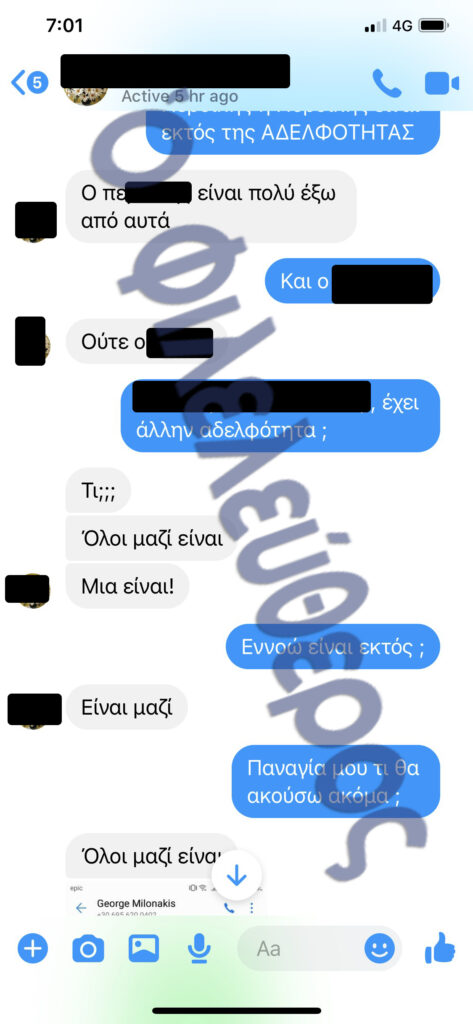
Speaking on ANT1, Clerides said “Sandy” told police she fabricated messages in response to questions he had asked her about specific public figures, including the Attorney General and named ministers, whom she claimed were members of an alleged brotherhood.
“She says that I was asking her questions when she was giving me this information about important figures in society. For example, the Attorney General. For example, minister so-and-so. I would ask her ‘is this minister also part of this situation?’ That’s what she says,” Clerides said.
According to her account, she would then research the person online and send fabricated messages back to him as if they were real communications.
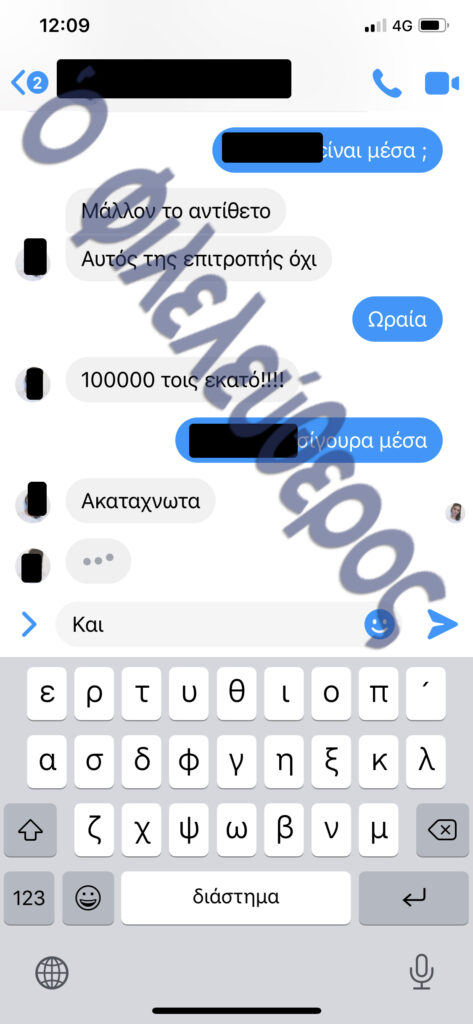
Clerides dismissed the claim. “In other words, and because she wanted to satisfy me, to make me feel she knew things in general, she did research on Google — according to her — found some information about the specific person I asked about and sent it back to me as if it were messages from the other person. But for this story to work it would need some time. I was receiving the messages in real time. In other words, the claims are rubbish,” he said.
Clerides also alleged that “Sandy’s” admission was the product of a cover-up attempt, saying she had been “made to say” what she told police by unnamed others who “do not want the truth revealed” and that she had acted “on instructions.”
On the search warrant, Clerides said police executed it in order to find a phone “Sandy” claimed she held around 2020 and gave to him for safekeeping. He denied ever having such a phone.
“I told them when they came to my office: search everywhere, I hope you find it if such a phone exists, because that phone is a treasure for all of us,” he said. He alleged the phone police were seeking is not the original phone from that period but one on which the apps were installed in 2026 when the messages were allegedly fabricated retrospectively and on instructions.
Police secured a retention order for two of Clerides’s mobile phones. A forensic copy was made of a third. Clerides said he intends to file a certiorari application and subsequently seek compensation from the Republic for breach of professional confidentiality caused by the search.
According to Phileleftheros sources, investigators received approval from the Attorney General’s office on Holy Thursday to file the warrant application, and met with the Law Office for that purpose on the same day.
The application was filed at court on Friday evening and approved just after midnight by the duty judge following several hours of examination. The warrant was executed on Holy Saturday morning.
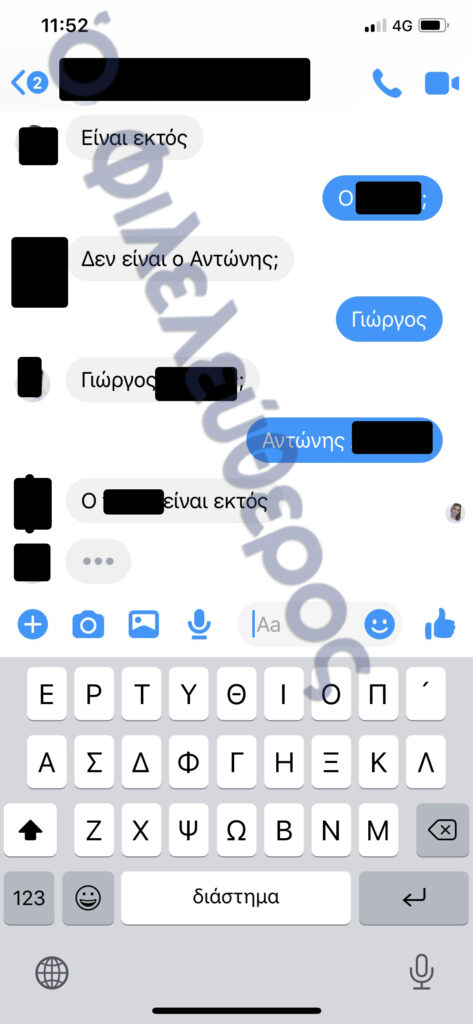
Phileleftheros reported on April 8 that investigators were searching for an application used to create fake SMS messages, based on “Sandy’s” testimony.
The publication obtained 156 files on April 5 and handed them to police on April 9. Among those files, according to Phileleftheros, are conversations between “Sandy” and a person asking whether judges, lawyers and politicians participate in a brotherhood and take significant decisions affecting Cypriot society, with “Sandy” responding with names.
If “Sandy’s” testimony is confirmed by Europol examinations, police will need to establish the motive behind the fabrication (if it is established) and whether anyone directed her, according to the source.
Deputy Minister to the Prime Minister Giorgos Mylonakis was hospitalised and intubated yesterday following a serious health episode. He suffered a fainting episode attributed to a brain aneurysm and was admitted to Evangelismos hospital in Athens, where his condition is described as serious but controlled.
He underwent an embolisation procedure yesterday, which Greek Health Ministry sources said went very well. Drousiotis had implicated Mylonakis in the affair, and Mylonakis had announced legal action against Drousiotis two days ago.
Justice Minister Costas Fytiris said yesterday he will brief the Council of Ministers next week on the progress of the investigation so that a decision can be taken on whether to appoint an independent criminal investigator.
Read more: