

No one will ever know whether, on that cold winter morning of 18 July 1994, the white van that stopped at 633 Pasteur Street in Buenos Aires caught the eye of a passerby. If anyone glanced at it, that moment vanished in the seconds that followed.
At 9:53 a.m., the driver — a 21-year-old Lebanese Shiite who had entered the country illegally — detonated the device. The 275 kilograms of explosives packed into the van obliterated him, along with any possible testimony about those final seconds before the destruction.
The building housing AMIA, Buenos Aires’s Jewish community center, collapsed within minutes. Eighty-five innocent people were killed, and about 300 were wounded. Behind the carnage lay no “misreading” of history but the cold logic of Iranian revenge: Tehran’s fury at Argentina’s unwillingness — or, more precisely, its refusal to comply — with the transfer of nuclear technology.
As the evidence indicated almost from the outset, the attack was orchestrated by Iran and Hezbollah — the same actors whose fingerprints had been left two years earlier on the bombing of the Israeli embassy in Buenos Aires. And not only there. It was one link in a long chain of operations, assassinations, and acts of terror, both those already carried out and the countless others that would follow in the years to come, as Tehran systematically invested in terror as an instrument of foreign policy.
Then came 7 October 2023 — the moment the Iranian terrorist regime surpassed even its own limits of brutality and, through a massacre, set the countdown in motion. First for Hezbollah and Hamas. Then for the mullahs’ Tehran itself. And so, one by one, those who for decades had signed off on death from the safety of their offices found themselves vanishing beneath rubble, consumed by the same violence they had inflicted on others for years.
Over the nearly half-century life of this barbaric construct bearing the oxymoronic title of “Islamic Republic,” Tehran has squandered the overwhelming bulk of its revenues not on building a country but on financing terrorism, fueling the arms race, and feeding its obsession with nuclear weapons — all in service of a goal it never truly concealed: the destruction of Israel.
To that end, it bought whatever could be bought: companies, real estate used to launder dirty money, channels of influence, even consciences. One of the many examples is Jeremy Corbyn, the former leader of Britain’s Labor Party, who admitted receiving £20,000 to appear on Press TV, the English-language Iranian state broadcaster that still maintains studios in London, pushing propaganda and singling out targets.
And yet the Corbyn case seems almost trivial beside what has, at various times, been attributed to that network. Press TV is accused not merely of echoing Tehran’s propaganda, but of turning it into an instrument of targeting: through television programmes such as “Palestine Declassified”, it targets Jewish charities, schools, community bodies and religious figures in Britain, portraying them as “genocidal Zionist organisations,” as vehicles of “infiltration” into British society, or as mechanisms for the “abuse” of children through education.
In one case, 14 Jewish charities were named. In another, Jewish schools were put in the crosshairs under the argument that “urgent action” was needed against them. At that point, this ceases to resemble merely extreme rhetoric. When an Iranian state network maps Jewish communal life in Britain by name, structure, and address, the result is a hit list. Definitely not journalism.
And when Press TV — which has also been accused of recruiting informants — continues to operate out of London despite Ofcom’s revocation of its license and despite international sanctions, the question is no longer what Press TV is, but who still allows it to function in this gray zone, and why.
Among the many incidents, there was also the recent arson attack on four ambulances belonging to a Jewish charity in north London — vehicles that served anyone in need, regardless of identity. It was then that “The Telegraph” wrote plainly what had for years been whispered: about the traces, the routes, the astonishing apathy of Downing Street.
The official responses were the usual ones — wooden, half-formed, almost ritualistic. But behind this episode lies a much larger landscape.
The operation is financed by networks of Iranians in the West who present themselves as “businessmen,” operating through shell companies and offshore structures while acquiring real estate in Britain and elsewhere worth hundreds of millions.
Some of those properties, investigations showed, overlooked the Israeli embassy in Kensington; some were found to be linked to the Khamenei family — specifically Mojtaba Khamenei, the regime’s new leader. The British state imposed sanctions on those identified, but the loopholes remain open to anyone with immense wealth and the right mechanisms to move it.
Hossein Shamkhani, for example, is said to have built a money-laundering and capital-transfer network centered on the hedge fund Ocean Leonid Investments in central London, within a web that, according to the disclosures, handled flows of Iranian and Russian crude and related trading activity.
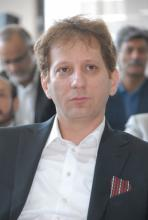
Babak Zanjani, meanwhile, set up the cryptocurrency exchanges Zedcex and Zedxion in London under the guise of a fabricated chief executive, “Elizabeth Newman.” On paper, they appeared to be dormant companies. In reality, according to the US Treasury, one of them had moved more than $94 billion, with roughly $1 billion linked to the Islamic Revolutionary Guard Corps.
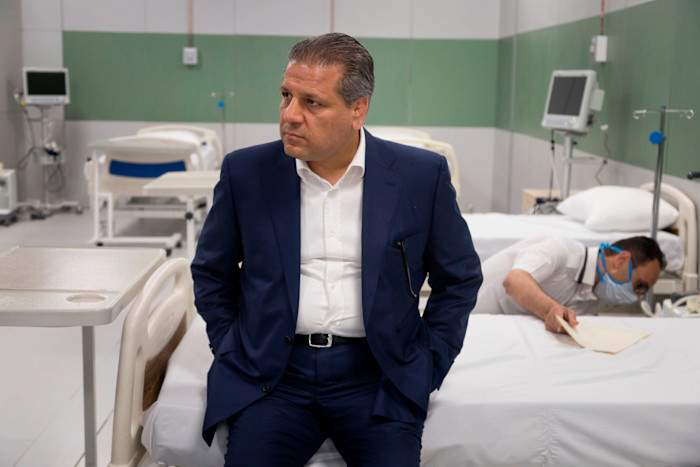
Ali Ansari, another pivotal figure in this web, was hit with sanctions and travel restrictions, while the Financial Times described how he built a European property empire worth about £344 million — from hotels and resorts to shopping centres in Germany and Spain — through shell companies in Germany, Luxembourg, the Netherlands, Spain and Britain, which ultimately led back to Caribbean tax-haven fronts.
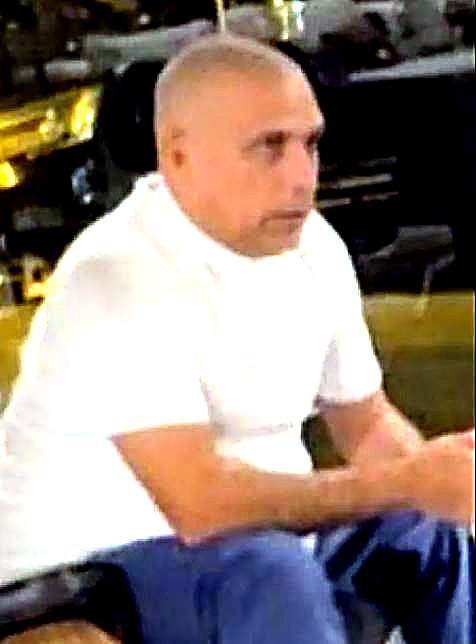
And in the oil trade, the United States last year sanctioned the network of Salim Said, accusing him of selling Iranian oil as Iraqi oil through blending, forged documents, and ship-to-ship transfers, while the Wall Street Journal later reported that a company linked to him had also invested in a hotel in London.
Most importantly, these are only some of the cases — some of the ones that, by chance or persistence, have come to light.
The real question is how much remains hidden behind nominee owners, shell structures, and the shadows beyond them. And then there is another one who allowed it all to happen, and why?