

The ceasefire that ended the conflict between Iran and the United States may have removed the immediate risk of a wider conflagration in the Middle East, but it has left fundamental questions about the region’s future unanswered.
Tehran’s nuclear programme, the strategic importance of the Strait of Hormuz, the new regional balance of power and the role of the major powers remain at the centre of a complex geopolitical puzzle — one whose ramifications extend beyond the region to international security as a whole, Antonis Klapsis, Associate Professor in the Department of Political Science and International Relations at the University of the Peloponnese, tells Phileleftheros.
At the same time, the crisis has laid bare the shifting balances of power in a world that is becoming ever more uncertain and unpredictable. Cyprus is inevitably affected by the new reality taking shape in the region, as well as by the fact that the international system is entering an era in which power increasingly trumps rules.
Does Tehran come out of these developments as a winner? How likely is it to make significant concessions on issues such as its nuclear and ballistic missile programmes or the management of the Strait of Hormuz?
The agreement that was signed amounts to a points victory for Tehran. Iran managed to hold out to the end and the Islamic regime stayed in place. In reality, the agreement does not set binding conditions on specific issues; it opens the way for new negotiations between Tehran and Washington rather than resolving them.
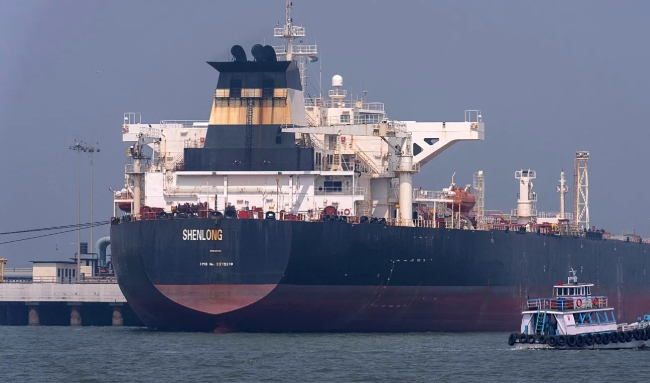
On the nuclear programme, the most likely outcome is that the Iranians will insist on preserving it in some form, under the pretext that it serves peaceful rather than military purposes. As for the Strait of Hormuz, Tehran played its hand as effectively as possible and acquired a negotiating advantage from virtually nothing. It will not relinquish that advantage easily — it will want to exploit it to extract as much as it can.
What state does the end of the conflict leave the Middle East in? Have there been, or are there likely to be, changes either in the regional rivalries for dominance or in the alliances between countries in the region?
The past three years have seen major shifts in the balance of power across the Middle East. One of the most significant developments was the collapse of the Assad regime in Syria, which deprived Iran of a traditional ally in the region that had been able to exert pressure on Israel. Iran’s overall foothold had been diminishing.
However, the conflict that began last February appears to have strengthened Tehran, which demonstrated in practice that it is capable not only of resisting external pressure but of inflicting damage at a regional scale.
The end of the conflict does not leave behind a stable regional order. It leaves a Middle East that is more fluid, more fragmented and more competitive. Israel remains powerful and pivotal, but the conflict also exposed the limits of its military superiority. Iran remains under pressure, but it has not been marginalised.
The Arab states of the Gulf have come to realise that neither American security guarantees nor individual arrangements with Israel are sufficient on their own to protect them from the consequences of a wider conflagration. Turkey, for its part, is seeking to exploit the fluidity to present itself as an indispensable interlocutor and potential arbiter of regional balances.
What does the apparent weakening of the United States in the Middle East mean for the region and for the international stage more broadly?
The US launched its attack on Iran with, as President Trump’s own public statements make clear, two main objectives: to topple the Tehran regime and to destroy Iran’s nuclear programme. It achieved neither. The regime emerges from the conflict strengthened — before the war it was grappling with serious internal problems, while its nuclear ambitions have not disappeared.
The United States still possesses enormous military power, but it is finding it increasingly difficult to translate that power into sustainable political outcomes. This is encouraging regional actors to move more autonomously, to seek alternative alignments and to test the limits of American influence.
For many analysts, Israel is among the losers of the conflict. Does this have implications for Cyprus and Greece and the alliances developing in the Eastern Mediterranean?
I am not convinced that Israel necessarily emerges weakened from the conflict. On the contrary, one could argue that, despite the costs and the vulnerabilities the crisis exposed, its pivotal role in the region is actually confirmed more strongly than before. It remains the region’s most powerful military and technological actor, with close ties to the United States and with growing importance to Western strategy in an environment of considerable fluidity.
This has direct relevance for Greece and Cyprus. Cooperation with Israel is not opportunistic, nor is it confined to energy. It forms part of a broader balancing strategy, particularly in response to Turkish revisionist policy in the Eastern Mediterranean. For Athens and Nicosia, Israel functions as a significant partner on security, defence, intelligence, technology and regional stability. The strategic relationship with Israel remains of great importance and must be maintained and deepened — while at the same time being embedded in a broader policy of balance.
Nicosia and Athens need strong ties with Tel Aviv but also open channels with the Arab world. What is needed is not a one-dimensional approach but a multi-dimensional strategy in which cooperation with Israel is a central pillar, though not the only one.
What role did Turkey play during the crisis? Do you see it as having made geopolitical gains, and how does that affect Cyprus and Greece?
During the crisis, Turkey followed its familiar tactic of calculated neutrality. It did not participate directly in the military conflict but sought to present itself as an indispensable interlocutor for all sides. At the same time, Ankara was watching the crisis through the prism of its own strategic priorities: it would not want a nuclear or fully uncontrollable Iran, but neither would it want an Israel so strengthened as to constrain Turkish ambitions in the Middle East.
In that sense, Turkey first reinforced its image as a regional player that cannot easily be ignored. Second, it exploited the relative discomfort of the United States and the reshuffling of regional balances to advance the idea that regional security cannot be organised without it. Third, it sought to deepen its relations with Arab and Muslim countries, presenting itself as a power capable of engaging with both the West and the non-Western world. The crisis did, however, also expose the limits of Turkish policy.
Your book “A World Without Rules” (Metaixmio) addresses how the international system is gradually becoming deregulated, with violations of the rules costing less and less. Is the Iran-US conflict further proof that we are living in a world without rules?
The US-Iran conflict is indeed one more symptom of what I describe in my book as the deregulation of the international system. That does not mean rules have disappeared. The UN Charter, the prohibition on the use of force, the principle of sovereignty all formally remain in place. The problem is that they are being violated with increasing frequency, interpreted at will, or circumvented without serious cost to those with the power to do so.
We are not living in a world without rules in the sense that they have been formally abolished. We are, however, living in a world where rules bind unevenly. The powerful have a greater ability to violate them or interpret them unilaterally, while the weaker tend to bear the consequences.
The case of the war against Iran illustrates precisely this tendency: military force is being used ever more readily as a tool of policy, even when its international legitimacy is contested.
The significance of the crisis is therefore not confined to the Middle East. It concerns the international system as a whole. It confirms that we are in an era where power increasingly takes precedence over law, where international institutions struggle to impose constraints, and where violations of the rules do not always generate a deterrent cost.