

Fate, Andreas Mavroyiannis writes, has a way of arranging things. Two young men from Cyprus landed in Paris on the same October day in 1977 without knowing each other existed. They met two days later, became inseparable, and remained so for half a century. In this tribute to his closest friend — chef Andreas Mavrommatis — Mavroyiannis draws on a lifetime of shared meals, conversations, and memories to sketch the portrait of a man who changed the face of Greek gastronomy in France.
He was from Agios Ioannis Pitsilias, near Agros, and our families were friends and best men. On his father’s side, the family had roots in Agros and Agios Ioannis; on his mother’s side, half came from Kato Mylos and the other half from Amiantos — home of the EOKA fighter Evagoras Papachristoforou.
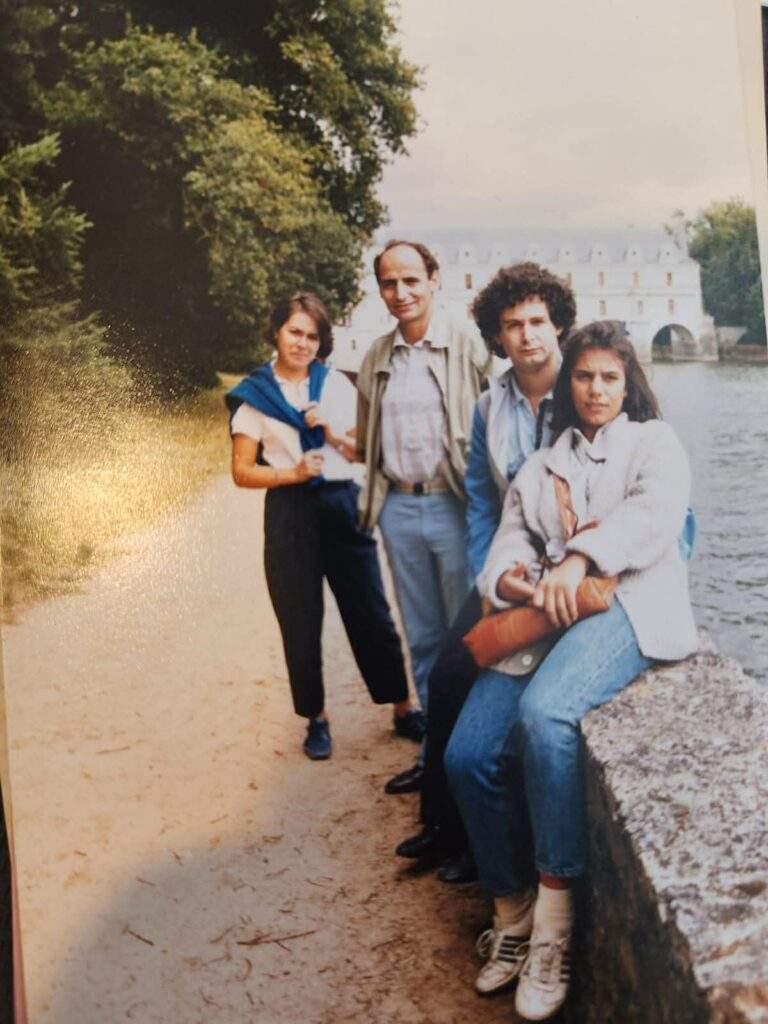
Andreas and I met much later. That is how fate works sometimes. We arrived in Paris in October 1977, on the same day, without knowing each other, and came across each other two days later at the Alliance Française, where we had both gone to learn French. From that day, and for the next fifty years, we were inseparable — closer than brothers.
He arrived with a hundred pounds in his pocket. It was all his family could give him. From the very first day he found work in Greek restaurants to keep himself afloat and pay for his studies. He turned his hand to everything. The following year his brother Evagoras came too. They shared a small room, worked round the clock, and lived without a penny to spare.
Two years later, still studying, Andreas found his chance: a small grocery shop he could buy. He started selling Greek products, added a simple gas cooker, made a few portions of moussaka, and gradually brought in some high tables and stools. The little place began to change.
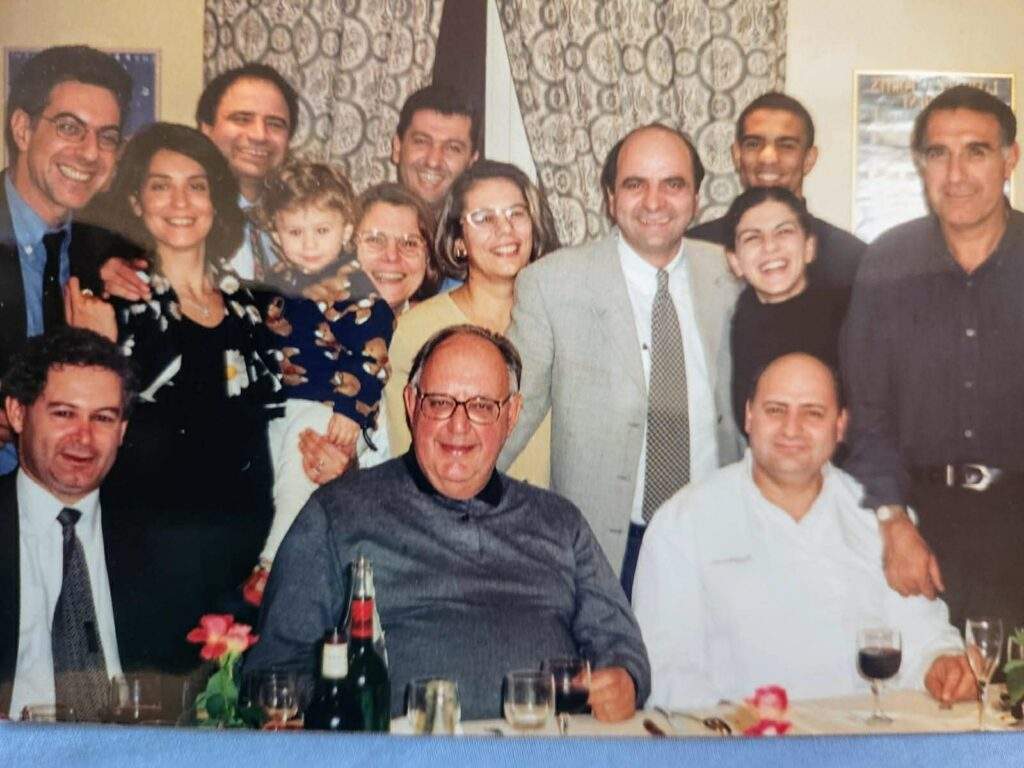
His first grounding in cooking came from his mother. But the real substance was passion. He was a perfectionist. Slowly the shop became a restaurant, the tables multiplied, and every two years he pushed a little further — until it had become Les Délices d’Aphrodite.
A simple Greek taverna was never going to be enough for him. He wanted more. So he enrolled at the Lenôtre school, learning alongside one of the towering figures of French gastronomy. That was where his deeper culinary search began. In the 1990s he opened Mavrommatis — his restaurant, which earned a Michelin star — while also building ready-food counters and Greek product outlets alongside it. By the early part of that decade he was already running a four-shop operation.
The family was at the heart of it. His brother Evagoras took charge of the business; later came the younger brother Dionysis and nephew Kostas. They worked as one. But Andreas was devoted to something deeper: the refinement of Cypriot and Greek cuisine, and its translation into the language of French gastronomy.
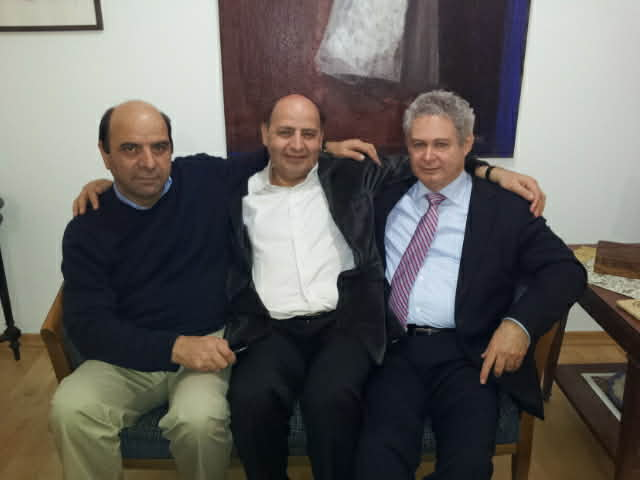
At a time when Greek restaurants in France were largely folkloric affairs, Andreas demanded something else entirely. He forged a genuine marriage between Mediterranean and Greek flavours and the French culinary tradition, and played a decisive part in raising their standing. From the 1980s he also threw himself into catering, eventually becoming the principal partner of the Greek and Cypriot embassies in Paris. Frequently — as I can attest from my own time there, first as a diplomatic officer and later as ambassador — he took initiative and bore costs himself, so that Hellenism would be represented as well as it possibly could be.
We talked politics endlessly, of course — we talked about everything. But above all, Andreas was a man who cared: about his homeland, about Hellenism, about everything unfolding around him, about the political situation in France and the wider world.
I was his official taster. Whenever a dish needed assessing, he would call me — we would go through the tasting, the trials, the back and forth, until we were satisfied. I always had observations. Always. That was precisely what he asked of me. But the most remarkable thing was what happened at the end: he would add one final touch and produce something that surpassed everything we had imagined. He let things breathe, absorbed what the exchange had given him, and then applied that last stroke — and made the miracle.
His contribution during Cyprus’s Presidency of the Council of the European Union in 2012 was extraordinary. He handled every meal across six months, and the results left a lasting impression. European officials spoke of it as the finest gastronomic presence they had ever encountered at events of that kind.
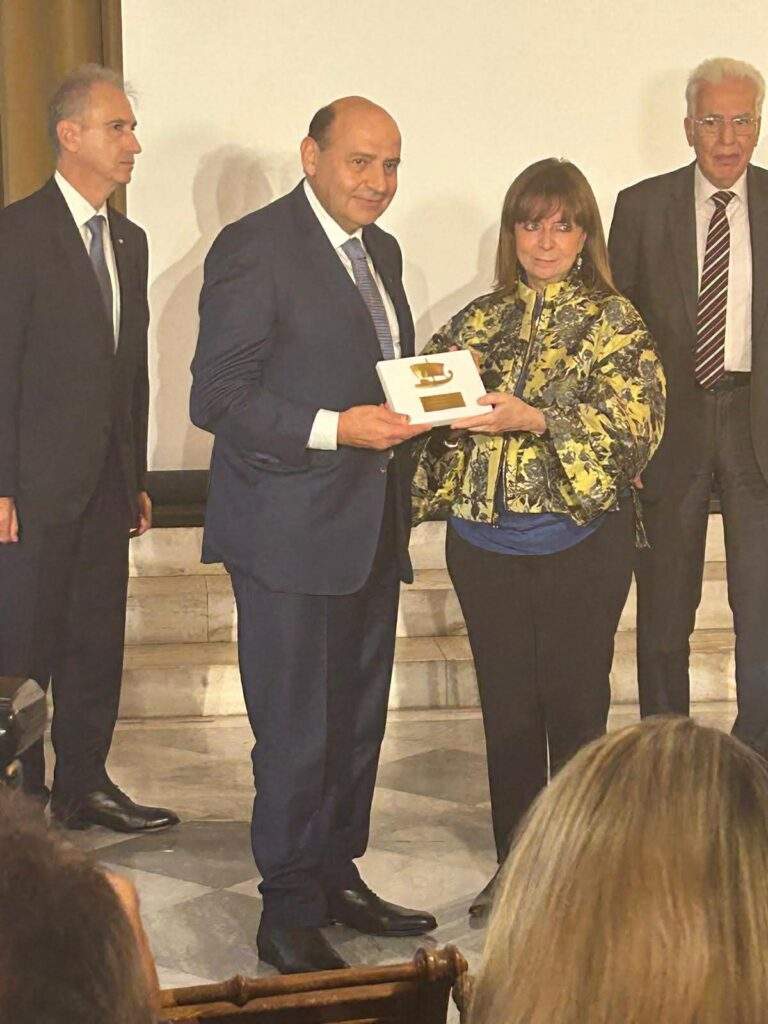
In 2024, the President of the Hellenic Republic, Katerina Sakellaropoulou, awarded Andreas Mavrommatis the Gastronomy Prize of the Brussels Hellenic Network “Argo” at a special ceremony held at the Athens Academy.
The funeral of Andreas Mavrommatis, who died on Saturday 14 March 2026, will be held on Sunday 22 March at 13:00, at the Church of the Archangel Michael in Agios Ioannis Pitsilias.
Read more: