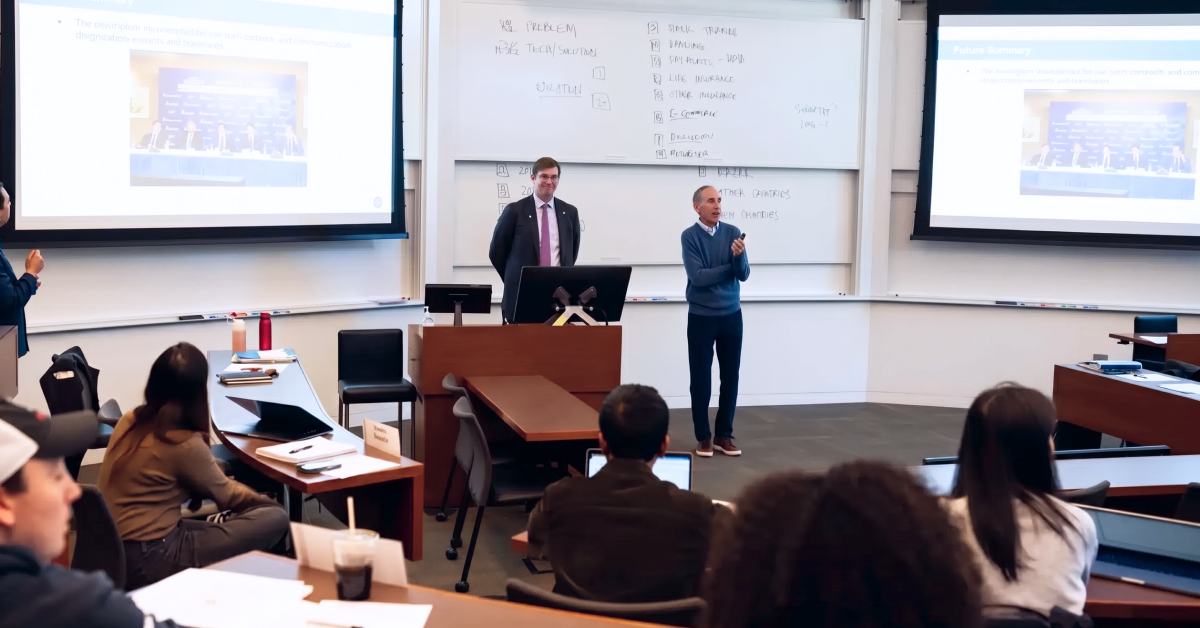

On 26 May, Timur Turlov, CEO of Freedom Holding Corp., a parent company of Freedom24, addressed MBA students at Stanford University in California. The session marked the first academic case study at the Stanford Graduate School of Business (GSB) dedicated to the corporate strategy of a Central Asian company.
The teaching material, published by Stanford GSB in June 2025, covers the group’s strategy, business model, Nasdaq listing, IT product launches and the construction of a corporate ecosystem. It is taught as part of Stanford’s curriculum on platform strategy and leadership in emerging markets.
A benchmark for product-market fit
The session was led by Professor Howard Rosen, who framed Freedom Holding as a benchmark for studying product-market fit. He noted that the case lets students work through the metrics that define high-growth companies: customer lifetime value, cost of acquisition and the daily-to-monthly active user ratio.
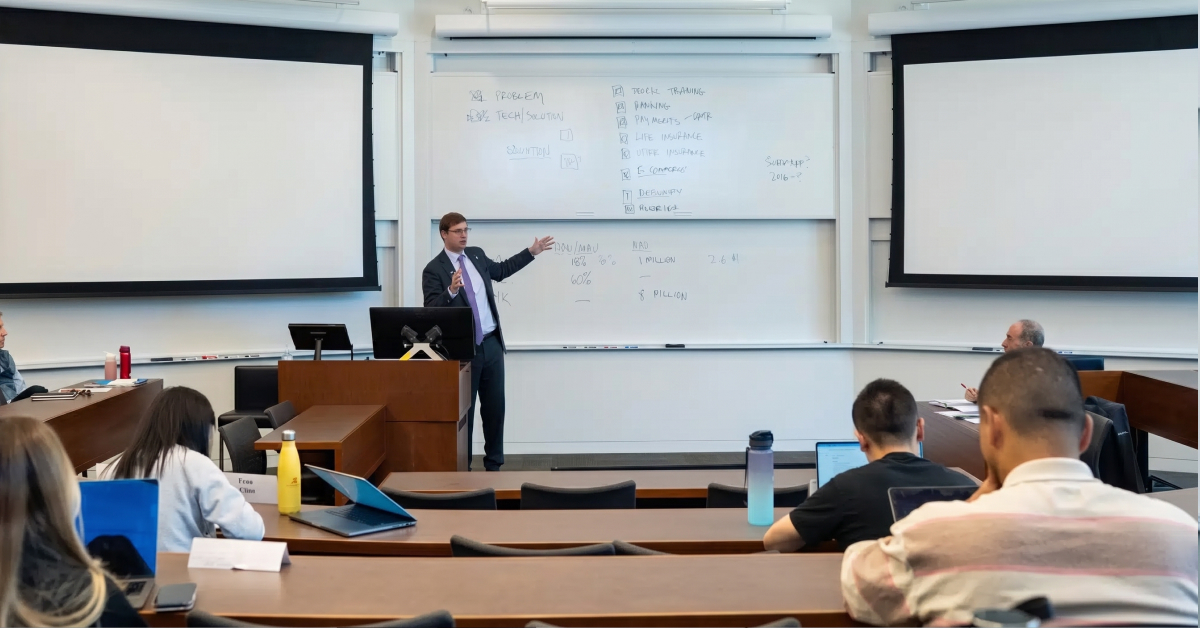
During the Q&A, Turlov discussed how Freedom’s group structure helps the company build credibility with new customers across categories, with the bank acting as an anchor that reinforces trust in the wider ecosystem. He added that Freedom pushes to lead in every area open to it under financial regulation. “If we were conservative, we wouldn’t have achieved anything. We’re trying to find the boundaries, even though regulators are under pressure from our innovations,” Turlov said.
Ecosystem as the operating model
Turlov told the audience that Freedom’s individual businesses would not have been competitive on their own, and that the holding was deliberately built so each company reinforces the others.
“We’re not just a holding company that owns everything. We consciously built Freedom as an ecosystem where each company’s presence makes sense. Our SuperApp clearly demonstrated why we’re competitive together, but not separately. Neither the bank nor the insurance companies could have survived or achieved significant success on their own,” he said.
Digital export and the move into Europe and the US
Turlov framed Freedom’s international expansion as part of a wider shift in how economies create value, moving from raw materials and manufactured goods towards high-margin digital products. The group is listed on Nasdaq and operates in more than 20 countries, with a growing European footprint anchored by Freedom24 in Cyprus and active retail operations across the EU.
“I think our technology export stories will definitely emerge. Just as everyone initially competed in the export of raw materials, and then in the export of manufactured goods, now everyone is competing in the export of digital products. The highest added value lies in the creation and exploitation of digital technologies,” Turlov said.
He also pointed to the next wave of geographic moves alongside the existing European and US presence, with the group actively building a product in Tajikistan and pursuing a licence in Georgia.
On the practicalities of exporting an ecosystem, Turlov cautioned against treating SuperApp as a turnkey product. “The idea that you can bring a ‘box’ with SuperApp, install it, and everything will unfold on its own is an illusion. The integration needs to be rebuilt and adapted to different regulatory regimes and reporting requirements,” he said. Kazakhstan’s business processes offer a working foundation that can be adapted rather than rebuilt for each market.Closing the discussion, Professor Rosen noted that the Freedom case teaches students how to identify unique niches within familiar markets. “It’s not where you start, the problem or the technology, it’s where you end up,” he said. The inclusion in Stanford’s curriculum is a marker of how far the group has come and a reference point for the next stage of its international growth.