

Cyprus offers thalassaemia patients an outstanding level of care that is among the world’s best, according to Maria Hadjidemetriou, an American-Cypriot patient.
Hadjidemetriou is an advocate who lived in Cyprus for three years and regularly visits the island. When she visits, she has her transfusions at the Thalassaemia Centre in Nicosia.
Cyprus has one of the highest carrier rates in the world, with the beta-thalassaemia carrier rate recently estimated at around 12 per cent of the population and the alpha-thalassaemia carrier rate at around 20 per cent, according to an article published in the Nature journal (2016).
Hadjidemetriou said the blood she is given there is typically just eight days old, with the centre returning any donation older than eleven days. In the United States, by contrast, blood can legally be transfused up to forty-two days after donation.
“I get my blood and I think; I’m getting iron. I’m not getting fresh red blood cells,” she said of her US transfusions. “There is a difference. I can feel it and see it.”
She also pointed to Cyprus’s haemoglobin thresholds as a model other countries should follow. Haemoglobin is the protein in red blood cells that carries oxygen around the body, and low levels leave patients fatigued and at greater risk of complications. Cypriot and Greek clinicians keep thalassaemia patients above ten grams per decilitre, she said, while her American haematologist kept her between seven and eight for a decade, between the ages of sixteen and twenty-six, a decision she blames for her later diagnosis with osteoporosis.
“This never happens in Cyprus or in Greece,” Hadjidemetriou said. She advised every thalassaemia patient to “advocate for yourself. You need to stay above ten haemoglobin to not end up with secondary diseases.”
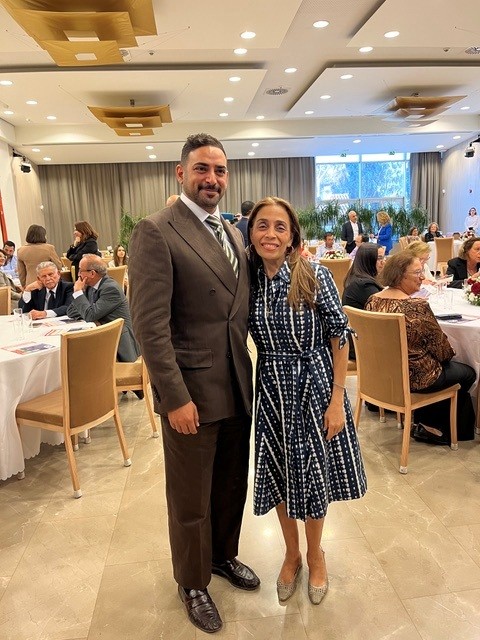
Cyprus has one of the highest carrier rates in the world
Thalassaemia is an inherited blood disorder that leaves patients unable to produce enough healthy haemoglobin, requiring regular transfusions and iron-removal treatment throughout their lives.
Cyprus was among the first countries to introduce a nationwide prevention programme, due to its high carrier rate. It’s built around premarital screening, which has sharply reduced the number of children born with the condition.
That legacy of early and organised action, Hadjidemetriou said, is part of what makes Cyprus a reference point for patients globally.
A childhood without silence
Hadjidemetriou was diagnosed with thalassaemia as a toddler, and her parents made a deliberate choice to talk openly about it, with their church community, their wider Greek community, her school and her extended family.
She was growing up as HIV and AIDS emerged publicly for the first time, and some children, on learning she had a blood disorder, kept a certain distance from her, something she responded to by explaining that her condition was inherited and not contagious. She said this experience pushed her to become outspoken about educating others on her disease, a responsibility her mother had always told her was hers to carry.
At sixteen, a visit to her local public library left a deeper mark. Medical journals she found there described patients with thalassaemia as “rodents” with “retarded features.”
“I thought, this is how my medical community thinks of me,” she said. “I was so taken aback.” She went on to publish two articles and make a documentary arguing that people with rare diseases can achieve as much as anyone else, and fighting stigma.
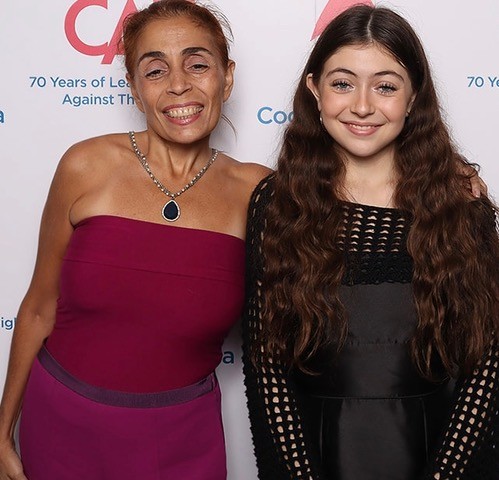
Rebuilding her own mindset
A US haematologist repeatedly told Hadjidemetriou that motherhood, and ambition more broadly, were not realistic for a thalassaemia patient, conditioning she said left her with deep limiting beliefs about what she could achieve. She credits a stack of American self-help books with helping her unlearn them.
“It was setting goals. It was getting rid of your limited beliefs,” she said. “The way we peel an onion, I had to peel away my limiting beliefs and then rebuild.”
The shift accelerated after she was diagnosed with iron overload and watched friends with thalassaemia die in their thirties. “I said, I’m not going to be that number,” she said. She began taking an iron chelator to clear the excess iron from her heart, started working with a nutritionist, and took up regular exercise, changes she credits with making her physically stronger, even as she later developed osteoporosis as a secondary condition. Meeting Meroula, a Greek-Brazilian patient and mother, reinforced the same message.
“I said to her, you mean we could be mothers?” Hadjidemetriou recalled. “She said, of course you can become a mother, and do not let anyone take that away from you.”
That promise held true. Hadjidemetriou went on to get pregnant, turning to an endocrinologist in Cyprus for guidance because, she said, she could not rely on her American haematologist’s experience in this area. She gave birth and breastfed her daughter, Julia, but had to stop at four months old after her ferritin levels rose, on her haematologist’s instructions.
She described the moment she believed would be her last time breastfeeding, telling her infant daughter that “mommy has to go back on her medicines.”
Julia, then four months old, seemed to understand, she said, pushing away when Hadjidemetriou tried to breastfeed her again afterwards.
She later learned from other mothers with thalassaemia that she could have stayed on an iron chelator and continued breastfeeding for far longer. One mother she spoke to had breastfed for fifteen months.
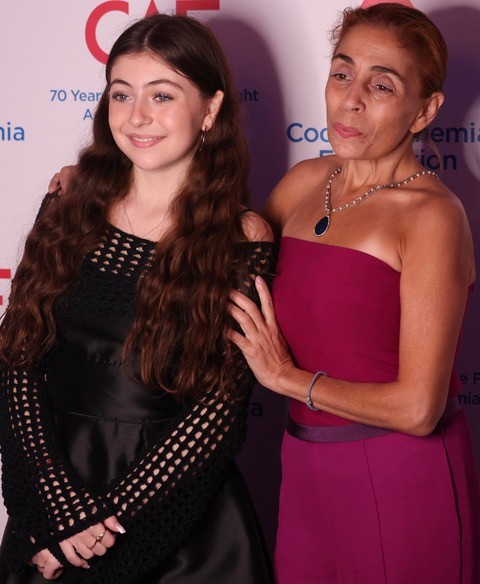
Making the case with the FDA
While living in Cyprus, Hadjidemetriou began taking deferiprone, an iron chelator approved across Europe but not yet available in the United States back then. When her US haematologist objected to her discussing the treatment with other patients, Hadjidemetriou continued sourcing it informally through contacts in Cyprus while working to bring the case to the US Food and Drug Administration.
The campaign succeeded in 2011, roughly a decade after the European Medicines Agency had approved the same drug. Hadjidemetriou was one of the few patients on it at the time.
“The FDA, throughout the years, saw me at all stages of my life: single Maria, and then engaged Maria, and then pregnant Maria, and then Mama Maria,” she said.
She was brought into the Cooley’s Anemia Foundation in her early twenties by a friend and fellow patient, Sophie Soshilos, who later died in her forties, and by Robert Ficarra, whose father founded the organisation. She has served on its board since 1996, and is one of its longest-serving patient board member.
The foundation has recently funded research into curative gene therapy, which has already cured some patients, including some now over fifty, previously the cutoff age for the procedure. Hadjidemetriou has chosen not to pursue it herself, citing the higher risks associated with the therapy later in life and her having a secondary disease of advance Osteoporosis.
Additionally, the Foundation funds research into Understanding Gene Therapy Preferences Among Patients, Restoring Fetal Hemoglobin Expression, Genetic Determinants of Non-Response to Luspatercept, and Impact of HLA alloimmunization on Gene Therapy.
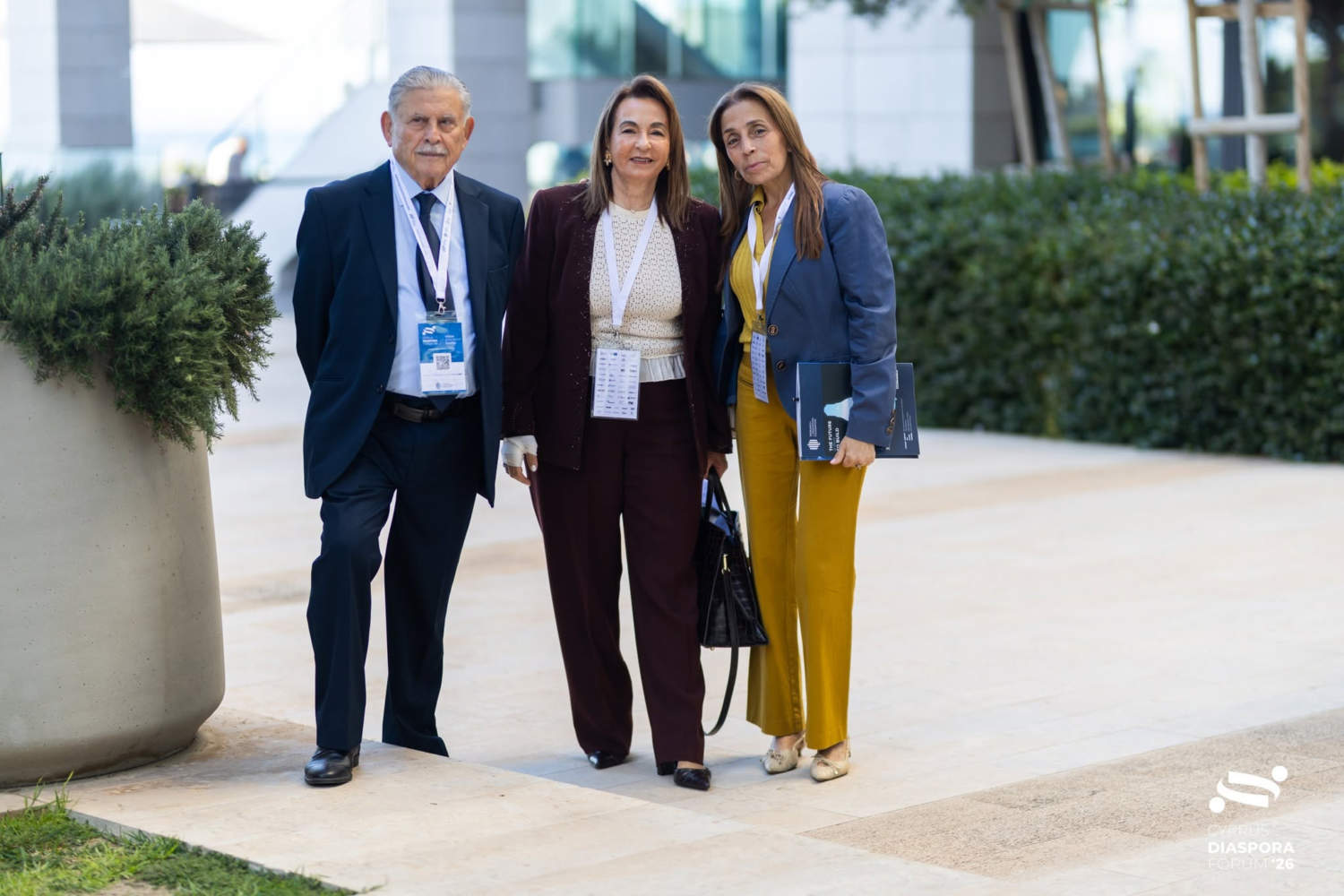
A high carrier rate, and a public response to match
Hadjidemetriou credited Miltos Miltiadous, president of the Cyprus Thalassaemia Federation, with sustaining public awareness through blood drives and campaigns, including around International Thalassaemia Day each May 8.
To blood donors, she has one message: “You are modern-day heroes”. “It does not hurt at all. Just one donation that you give can save up to three lives.”
The Thalassaemia International Federation (TIF), headquartered in Nicosia, was founded by patients and parents in 1986. International Thalassaemia Day was established in 1994 by the federation’s president, Panos Englezos, in memory of his son George, who died of complications related to the condition, Maria told us.
Extending the work beyond Cyprus and the US
Hadjidemetriou also sits on the board of directors of the Thalassaemia International Federation, which she said oversees thalassaemia care across 67 countries and has published patient guidelines in six or seven languages.
Within the federation, she is a co-founder of the Pan American Network for Hemoglobin Disorders, one of several regional initiatives, alongside networks covering Southeast Asia and the Middle East, set up to reach patients with unmet needs in specific parts of the world.
The Pan American network runs webinars aimed specifically at patients across North and South America, part of what Hadjidemetriou described as a constant effort by the federation to reach more patients wherever gaps in care remain.
She is very passionate about the advocacy work she does, saying “I love, love my global community”.