

If there were a list of the terms most frequently used by public figures in Cyprus, “conflict of interest” would certainly feature prominently. The term has again dominated public debate in recent weeks because of the investigations into the “Mafia State” and Videogate cases.
The clash of views has once again highlighted two issues. First, the public discussion shows that not everyone clearly understands what constitutes a conflict of interest or a relationship that may compromise impartiality. Second, it has reinforced the belief that the existing rules are not strong enough to make those in positions of power or elected office feel obliged to disclose ties that could lead to a conflict of interest or a lack of impartiality.
The Sunday edition of Phileleftheros is reopening the issue in an attempt to revive a long-running debate that parliament may so far have been reluctant to address decisively.
As part of this effort, it revisits the findings of a report prepared for parliament in 2015 by current Foreign Minister Constantinos Kombos, then a university professor, and Professor Aristotelis Constantinides.
The report proposed new legislation governing conflicts of interest. It was discussed by the House Institutions Committee at the time, but no further action followed.
DISY MP Nikos Georgiou and AKEL MP Andreas Pasiourtides also set out their views on conflicts of interest and the prevailing culture in Cyprus.
‘Mafia State’ and Videogate
The most recent controversies over possible conflicts of interest involved the appointments of Christos Mylonopoulos, Ilias Anagnostopoulos and Andreas Paschalides.
The first two were appointed by the cabinet as criminal investigators in the “Mafia State” case. Mylonopoulos resigned following public criticism and was replaced by Anagnostopoulos.
Paschalides was reappointed by the cabinet as chairman of the Independent Authority for the Investigation of Allegations and Complaints against the Police for a third five-year term.
In the “Mafia State” case, the attorney-general and deputy attorney-general had already recused themselves because of their relationship with the former president of the Republic, who is under investigation for alleged abuse of power and trading in influence.
The cabinet then appointed Mylonopoulos to the investigative team, prompting objections because he had represented Michalis Zolotas in the Focus case.
Mylonopoulos resigned under pressure. The government, however, rejected claims that a conflict of interest existed, saying he had stepped down out of institutional sensitivity and to protect public confidence.
The cabinet subsequently appointed Anagnostopoulos, who represents Tal Dilian in proceedings in Greece over the surveillance scandal.
Serious objections were also raised over that appointment, but the executive stood by its decision.
Before the controversy surrounding the “Mafia State” investigation had subsided, a new dispute erupted over the reappointment of Paschalides as head of the police complaints authority.
The opposition again raised concerns because of Paschalides’ role in investigating Videogate.
Several months earlier, the attorney-general had appointed him as an independent criminal investigator to assist the police investigation.
His reappointment was interpreted as casting a shadow over the process because he received an appointment from a person whose conduct he was required, in a separate case, to assess for compliance with the law.
Paschalides’ report on Videogate is expected to be submitted within the coming days.
No comprehensive law or definition
Cyprus has no legislation comprehensively regulating conflicts of interest.
This also means there is no precise statutory definition, leaving interpretation open to each person’s subjective judgement.
The most widely recognised and frequently cited international definition comes from the Organisation for Economic Co-operation and Development.
“A conflict of interest involves a conflict between the public duty and private interests of a public official, in which the official has private interests which could improperly influence the performance of their official duties and responsibilities.”
Conflicts of interest are divided into three main categories.
Actual: A direct conflict between official duties and private interests.
Potential: Private interests that could conflict with professional duties in the future.
Apparent: A situation in which third parties could reasonably believe that a person’s private interests may influence their judgement.
The 2015 Kombos–Constantinides report
The recommendations of a report prepared for parliament by current Foreign Minister Constantinos Kombos and his then University of Cyprus colleague Aristotelis Constantinides are likely still sitting in a parliamentary drawer or electronic archive.
In 2015, the two academics proposed new legislation defining conflicts of interest for public office-holders, whether elected or appointed, as well as for civil servants more broadly.
The report essentially called for a stronger system of voluntary conflict-of-interest declarations combined with immediate public disclosure.
According to reports published at the time, public office-holders would be divided into categories and required to disclose potential conflicts of interest in advance. The consequences would vary depending on the category concerned.
The first category would include the president of the Republic, the attorney-general and deputy attorney-general, the auditor-general and deputy auditor-general, the governor and deputy governor of the Central Bank, members of the Public Service Commission and cabinet ministers.
They would be required to make a compulsory public declaration at the outset. The appointing authority would have to consider the declaration before making the appointment.
A refusal to submit such a declaration would also have to be taken into account by the appointing authority.
The second category would cover parliament and its members.
Kombos and Constantinides proposed a code of conduct and submitted a draft. Constantinides told Phileleftheros that this was the only one of their proposals to be adopted, as the current code incorporates elements of the report.
The third category would include all other appointed officials, commissioners, mayors and municipal councillors. They would be required to submit a compulsory declaration to the Auditor-General.
The fourth category would cover all other civil servants.
The report also proposed establishing a three-member committee empowered to impose sanctions when an inaccurate declaration was submitted.
Aristotelis Constantinides: Parliament can still use the report
Aristotelis Constantinides, associate professor of international law and human rights law at the University of Cyprus, told Phileleftheros that the report remains available and could still be used today.
He explained that the 2015 proposal covered all state officials except members of the judiciary, which has its own rules.
Asked whether it could also apply to people appointed to independent committees, Constantinides said it could cover anything parliament wished it to cover.
The original idea concerned state officials, but it could also be applied more broadly, he added.
Constantinides argued that placing a written definition of conflict of interest in law could also affect people who are not state officials, including appointees to independent committees.
Introducing separate legislation could help create a culture in Cyprus that would indirectly establish the rule as a generally accepted standard, he said.
Nikos Georgiou: Recusal is an act of responsibility
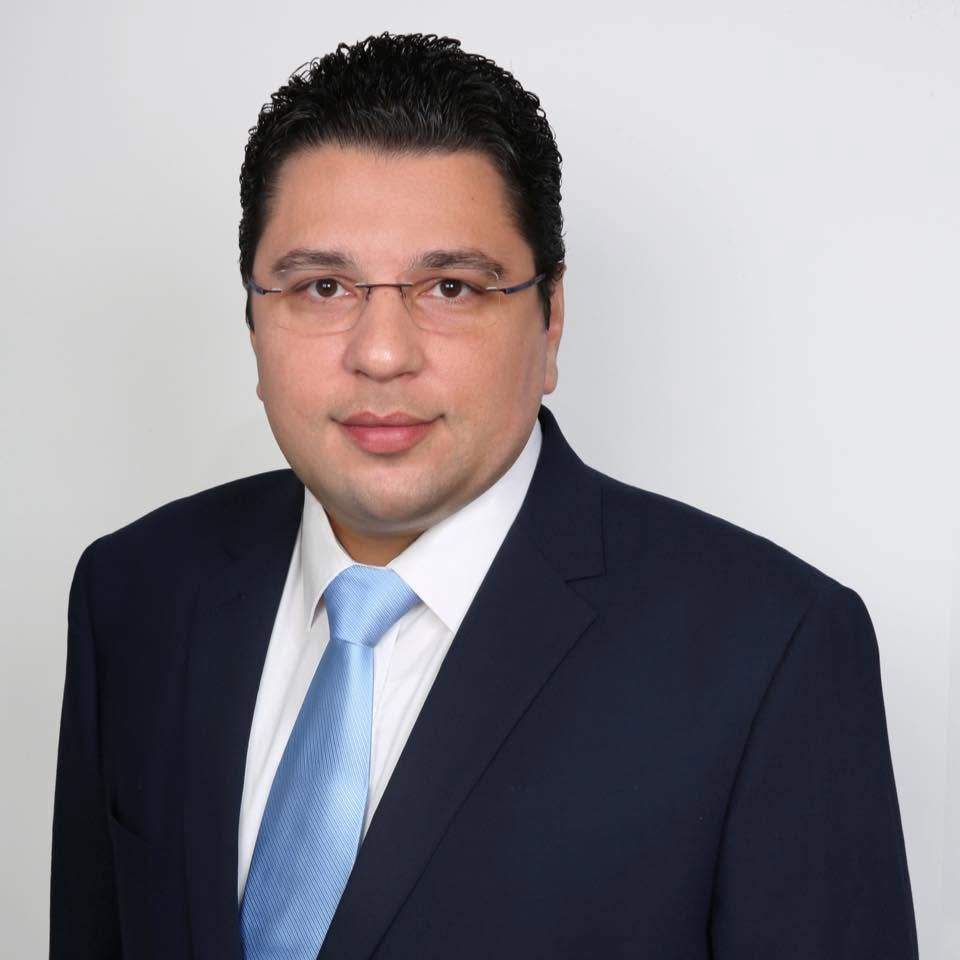
DISY MP
“A conflict of interest is one of the most serious challenges facing the operation of a modern state governed by the rule of law.
“It arises when the personal, family, professional, financial or political interests of a person exercising authority may influence, or create the reasonable impression that they influence, the objective performance of that person’s duties.
“There is no need to prove actual favouritism or unlawful conduct. It is enough that circumstances exist which could raise reasonable doubts about the impartiality and integrity of the process.
“The familiar saying is entirely appropriate here: ‘Caesar’s wife must not only be honest; she must also be seen to be honest.’
“Likewise, representatives of institutions, state officials, public officials and judges must not only act with genuine honesty and impartiality. They must also dispel every reasonable suspicion concerning their integrity.
“For that reason, recusal should not be viewed as an admission of guilt or weakness, but as an act of responsibility.
“When a person with decision-making authority realises that they are directly or indirectly connected to the subject of a decision, they must disclose the conflict and withdraw from the relevant process.
“This protects not only their personal standing, but above all the credibility of the institution they represent.
“Recusal operates preventively, before any suspicion of favouritism, bias or abuse of power can arise.
“At the political level, abstaining from decisions involving personal or related interests strengthens transparency, accountability and public trust.
“At the judicial level, recusal ensures that justice is administered by independent and impartial bodies and that there is not even a suspicion of bias or private influence.
“Impartiality must be genuine, but it must also be visible to every reasonable and objective observer.
“Protecting the integrity of institutions therefore requires not only the absence of an actual conflict, but also the removal of every trace of reasonable suspicion.
“Representatives of institutions must act in a way that gives the public confidence that their decisions serve the public interest alone.
“The timely declaration of interests, transparency and recusal are fundamental safeguards of institutional integrity and society’s trust.”
Andreas Pasiourtides: Conflict of interest is an inherently political concept
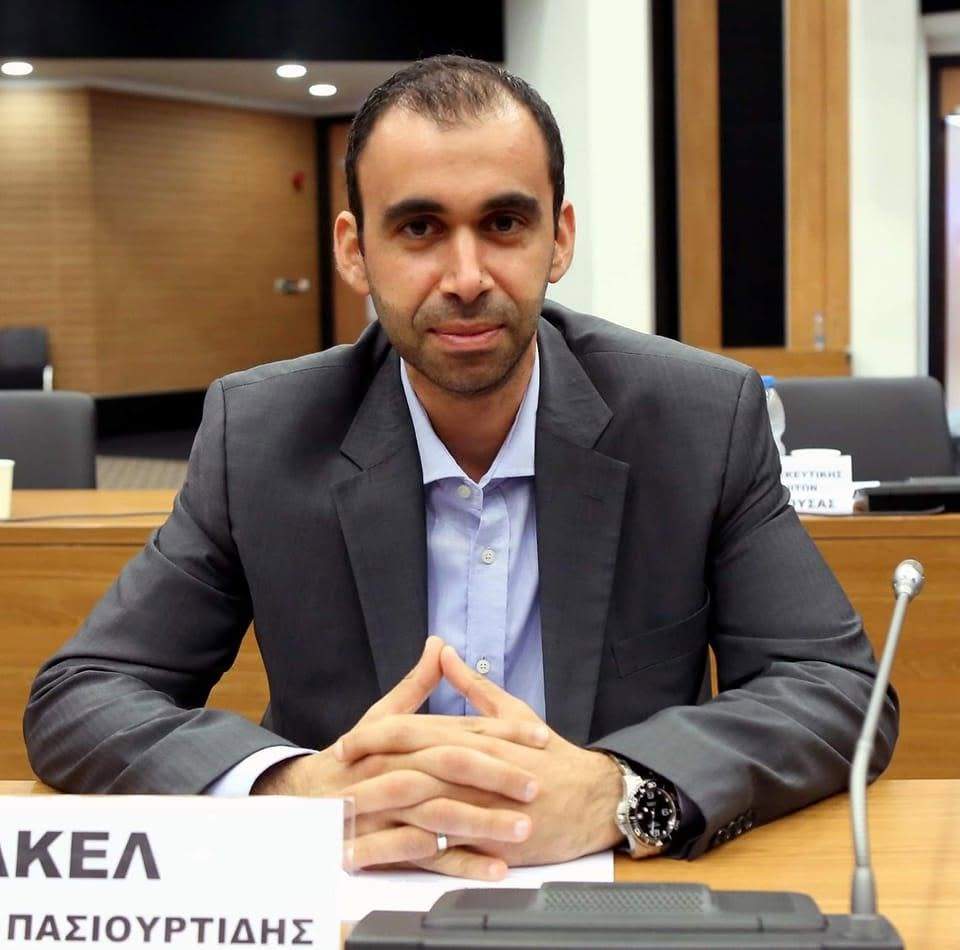
AKEL MP
“The previous government completely emptied the concept of conflict of interest of all meaning. That is a fact, and we experienced it in many cases.
“What is obvious is that the present government is continuing in the same pattern by failing to understand the concept of conflict of interest.
“You may have to explain the issue to ordinary members of the public and be more understanding of a lack of knowledge. A government, however, has absolutely no excuse.
“For example, whenever a conflict-of-interest issue arises, the line of defence is always whether something is legal.
“A conflict of interest is not always about legality. It concerns whether one decision may have consequences for another case because interests connected to the same person, or to their wider family or social circle, overlap.
“For example:
“Approving passport applications submitted by your daughters’ law firm may be legally permissible, but politically it should not happen. It is a basic principle of good administration that you cannot make a decision that benefits you or your family.
“Reappointing Paschalides for a third term one week before he issues his Videogate report gives the impression that the person effectively under investigation is rewarding the person investigating him with an appointment.
“This may not be legally defective, but politically it cannot be acceptable. It casts doubt on both the investigation itself and the selection criteria.
“In summary, conflict of interest means that anyone exercising power must understand that, when called upon to decide on something which may either be influenced or create the impression that influence is being exerted, they should avoid becoming involved.
“Conflict of interest is an inherently political concept, and it is for the person in power or the politician concerned to decide how to deal with it when it arises.
“That is how a politician will be judged.”