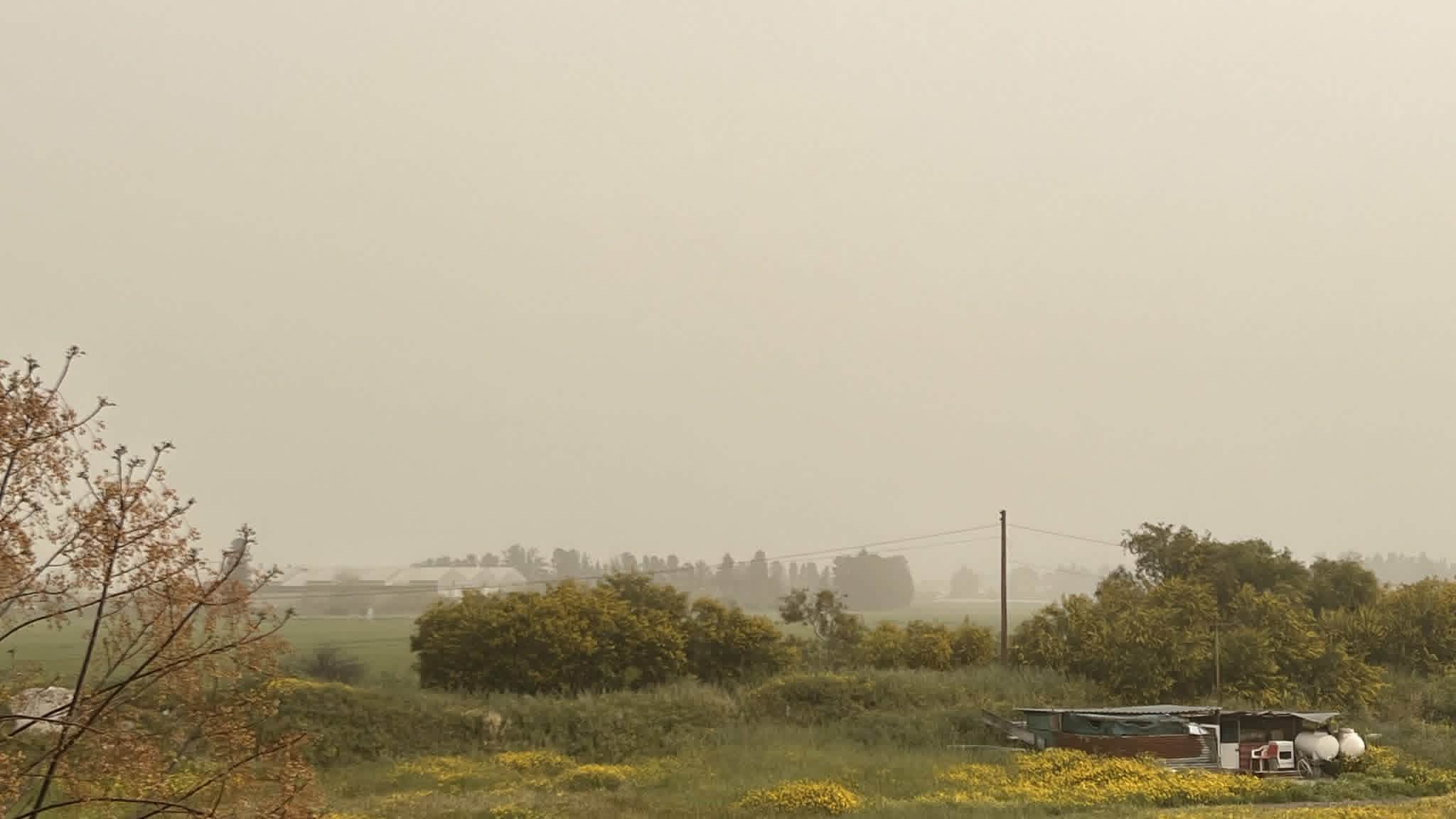
Dust episodes affecting Europe are intensifying, posing growing challenges for air quality and public health, according to a new international study with a significant contribution from researchers at The Cyprus Institute.
The study, published in the journal Nature, links the increasing intensity of dust transport from the Sahara and other desert regions to broader environmental changes associated with climate change, including worsening drought and land degradation in North Africa, and shifts in atmospheric circulation patterns that favour dust transport towards Europe, the press release says.
The findings suggest climate change’s impacts may extend beyond temperature changes and weather extremes, into the quality of the air people breathe.
Impact of dust on air quality and public health
Southern Europe already experiences around 46 dust episodes each year, events that increase particulate matter concentrations in the atmosphere and contribute to poorer air quality, stated the press release.
Transported dust in the region accounts for approximately one third of the World Health Organization’s annual mean particulate matter pollution (PM10) guideline value for air quality, the study found.
High concentrations of transported desert dust may have adverse health effects, including asthma exacerbation and increased mortality, the press release stated. In recent years, desert dust episodes in Southern Europe have been associated with an approximately 0.67 percent increase in daily mortality, and a 2.5 percent increase in respiratory hospitalisations among children, according to the study.

Significance for Cyprus and the Eastern Mediterranean
The research shows a gradual increase in transported dust across Europe over the past century, based on dust measurements in Alpine glacier ice.
The findings are particularly significant for Cyprus. The press release stated that the Eastern Mediterranean is among the European regions most affected by transported desert dust, and has seen some of the greatest increases in the intensity of dust episodes over the past decade.
Average concentrations of desert dust in Southern Europe are more than twice as high as in Central and Northern Europe, the study also found.
Researchers from The Cyprus Institute’s Climate and Atmosphere Research Center (CARE-C), co-authors of the study, explain that desert dust is a natural phenomenon that has long been a feature of the region. The new study, however, shows that dust episodes and their associated impacts have been intensifying over time, with the conditions favouring more intense episodes changing in ways consistent with the influence of climate change.
Desert dust could therefore become an “even greater challenge for air quality and public health in the years ahead.” Better preparedness for more intense dust episodes, together with continued action to address climate change, will be essential for protecting public health and improving air quality, the press release noted.