

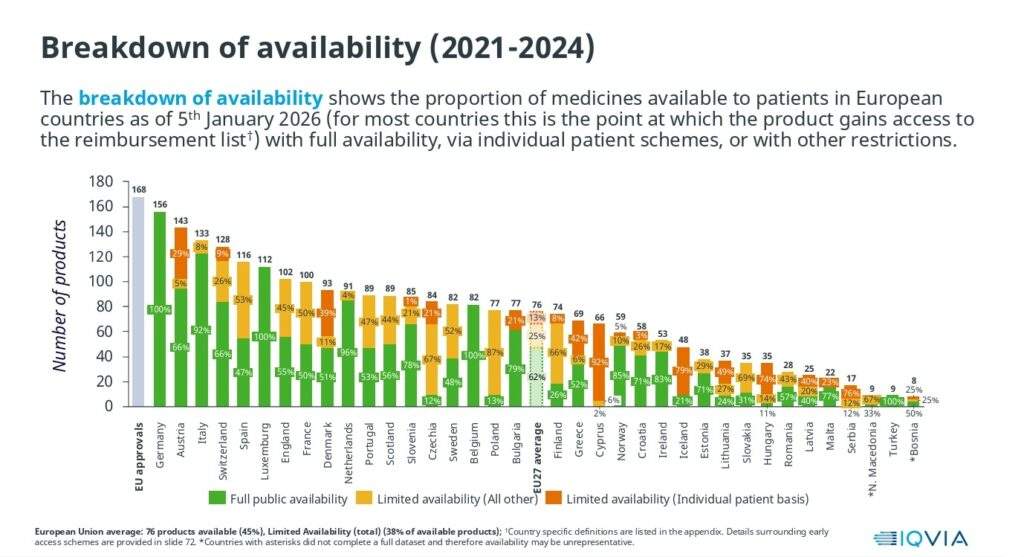
Cyprus has access to just 39% of newly approved innovative medicines — below the European average of 45% — and ranks 21st out of 36 countries for patient access to new treatments, according to data published on May 19, 2026 by the European Federation of Pharmaceutical Industries and Associations.
The W.A.I.T. (Waiting to Access Innovative Therapies) Indicator report, covering medicines approved between 2021 and 2024, was released locally by the Cyprus Association of Pharmaceutical Companies Research and Development (KEFEA) and records significant disparities in treatment availability across EU and European Economic Area countries.
Of the 168 innovative medicines that have received European approval, 66 are available in Cyprus. Of those, only 2% are dispensed without restrictions or additional procedures; 92% require special authorisations or carry access restrictions. In Germany, which leads the European ranking, all new medicines are available without restrictions and 156 of the 168 approved treatments are accessible to patients.
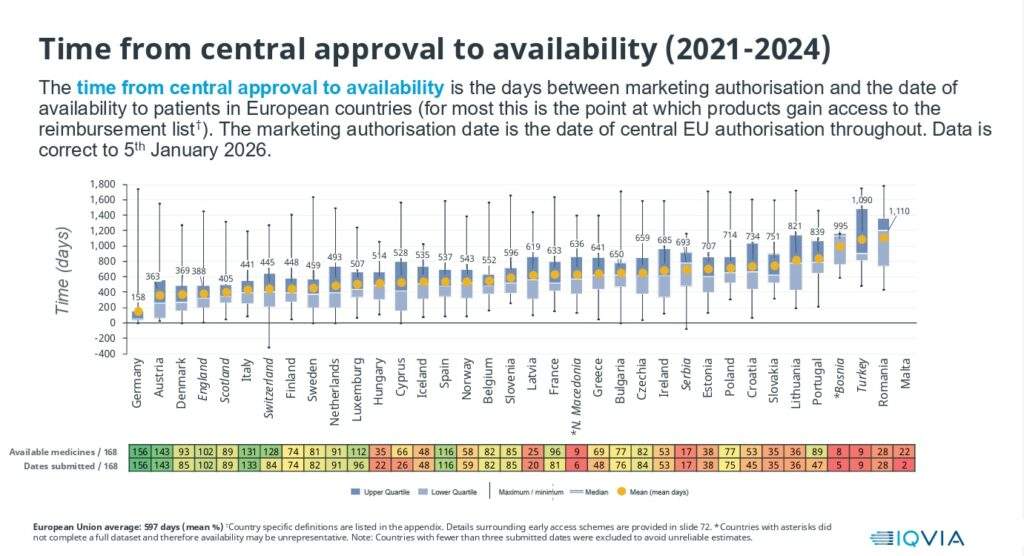
Cyprus performs better than the European average on waiting times, with patients waiting 528 days on average from European approval to availability, against a 36-country average of 597 days. Germany records the fastest access at 158 days; Romania the slowest at 1,110 days. Despite the shorter wait, KEFEA said overall patient access remains limited. The exception is oncology: Cyprus has access to 32 of the 56 new cancer medicines covered by the study — 57% — placing it in a strong position in that category.
KEFEA attributes the broader access barriers to slow regulatory procedures, differing assessment requirements, and constrained health budgets, and argues that closer cooperation among all stakeholders is needed. The association says procedures should be changed so that patients can access new medicines immediately after European approval, before national assessment and reimbursement processes are complete.
KEFEA president Kyriakos Mikellis said delays remain a serious problem despite recent improvements in availability. He noted that assessing new medicines still takes two or even three years in a number of cases, and called for faster procedures, adherence to deadlines, and greater investment in medicines by both the Health Insurance Organisation and the Ministry of Health. He added that while new health technologies often carry a higher cost, the benefits they offer patients, the health system, and society outweigh the financial burden.
Read more: