

Britain showcased universities, innovation partners and youth mobility programmes at the Cyprus Youth Tech Fest in Limassol, positioning education and people-to-people ties as the backbone of its post-Brexit engagement with Cyprus.
More than 40 UK universities took part at the festival which took place on Saturday, 07 February.
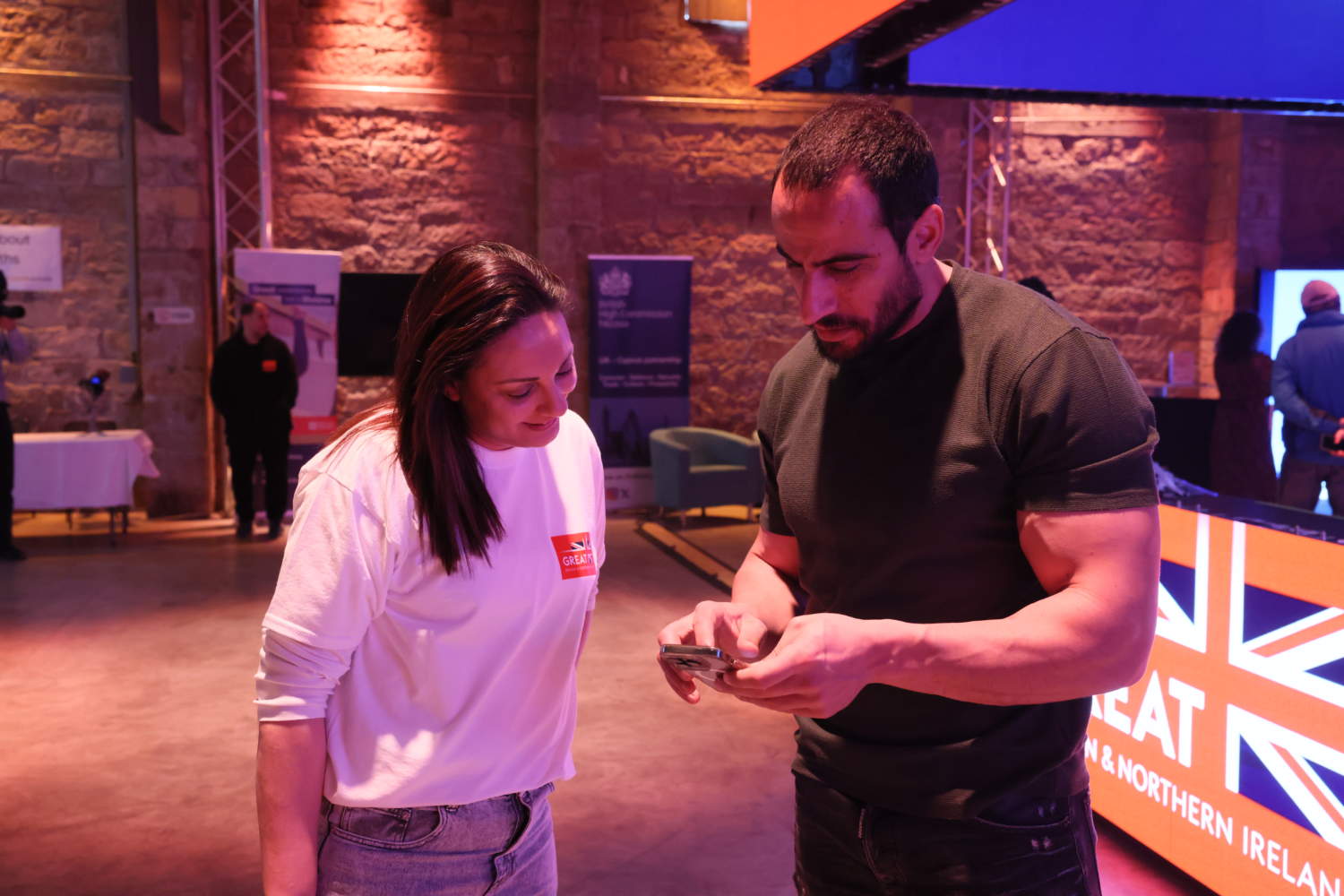
Speaking to in-cyprus on the sidelines of the festival, British High Commissioner Michael Tatham said the UK pavilion was designed to give young Cypriots direct access to universities, scholarships and advice, while also highlighting broader UK–Cyprus cooperation in technology and innovation.
“The young Cypriots who are interested in the opportunities to study in the UK can talk to different universities, explore the sort of possibilities for doing different courses, explore the scholarship options and get personalised advice about the opportunities to study in the UK,” he said.
According to Tatham, education formed one half of the UK’s presence at the festival. “There are over 40 of the top universities in the UK that are participating in that side of our pavilion,” he said.

Education and innovation
Alongside higher education, the UK pavilion also featured partnerships with organisations and companies operating in Cyprus, such as PWC, Sky Trek and the Cyprus Computer Museum.
The aim, Tatham said, was to provide immersive experiences that go beyond traditional education promotion. “What we’re doing here is offering people coming to the festival the opportunity to explore innovation, explore technology, explore science, and to do that in an exciting way with immersive, hands-on experience.”
Tatham said the UK hoped the initiative would strengthen bilateral cooperation. “We hope that it will contribute to the partnership between the UK and Cyprus in the areas of innovation and technology, digital skills and so on,” he said.
Impact of Brexit on student numbers
Addressing questions on the impact of Brexit, Tatham acknowledged that the UK’s departure from the European Union had reduced the numbers of Cypriots studying in the UK.
“You’re right that since the UK left the EU, the number of Cypriot students going to the United Kingdom to study has fallen because tuition fees have increased,” he said.
Following Brexit, EU nationals are no longer eligible for home tuition fees in the UK, making study more expensive for Cypriot students.
Despite this, Tatham said opportunities for Cypriot students remain, particularly through scholarships offered by individual universities.
“Some of the universities that have stands here today offer scholarships for EU students that reduce the price of the fee,” he said, encouraging interested students to engage directly with institutions. “I’d recommend that all interested Cypriots explore those opportunities.”
He added that a return to home tuition fees for EU students was unlikely in the near future. “I don’t see the return to home tuition fees in the near future,” he said.

Youth mobility and Erasmus Plus
Beyond university study, Tatham highlighted developments in youth mobility, describing them as a growing area of UK–EU engagement.
“The UK has recently announced that it will be joining the Erasmus Plus scheme,” he said, describing the move as opening the door to “more youth exchanges, and not just university students, but also schools, sports clubs and so on”.
He also said negotiations were under way on a broader youth experience agreement between the UK and the European Union, although details had yet to be finalised.
“The details still have to be worked out, but I think I’m optimistic that we’ll reach a conclusion there, and that when we do that, it will open up more opportunities,” he said.
People-to-people ties
Tatham framed the UK’s presence at the festival within the wider context of longstanding ties between the two countries.
“There are many strong people-to-people connections between the UK and Cyprus,” he said, pointing to the size of the Cypriot diaspora in Britain and the volume of travel between the two countries.
“There is a very large and successful Cypriot diaspora in the United Kingdom, and over a million British tourists visit Cyprus every year,” he said.
Those links, he added, continue to underpin cooperation in education, culture and skills development, despite political changes following Brexit.
Tatham said the festival offered an opportunity to bring together universities, businesses and cultural institutions in one setting, allowing students to explore options at a time when international education choices have become more complex.
While acknowledging the financial barriers created by Brexit, he said the UK remained committed to maintaining close links with Cyprus through targeted programmes, partnerships and youth exchanges.
(Pictures by Antonis Antoniou)
Read more: