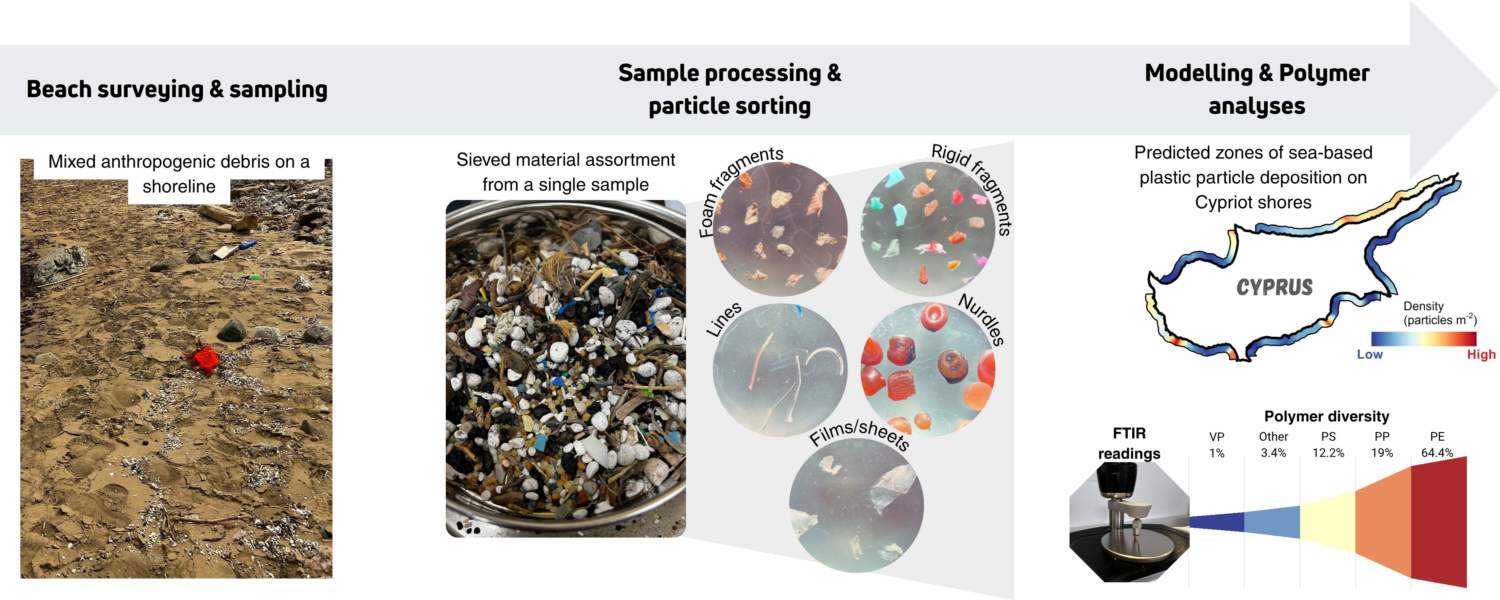

The sea, rather than rivers or coastal runoff, is the primary source of microplastic and mesoplastic pollution on Cyprus beaches, according to the first comprehensive scientific study of plastic debris on the island’s shores.
The study, published in the Journal of Environmental Chemical Engineering, sampled 16 sites across approximately 500 km of coastline in spring and autumn 2022. It found that around 69% of shorelines were susceptible to sea-based debris, while only 6% were linked to land-based inputs. A quarter of shorelines were heavily impacted by marine-derived plastic pollutants.
“Our results indicate that fragmented plastics found onshore primarily originate from the marine environment, rather than from rivers or coastal runoff,” said lead author Dr. Ioannis Savva. “This suggests that the issue is more closely linked to offshore contamination, and management strategies should be adapted accordingly.”
Microplastic densities averaged 336 particles per square metre, with individual samples peaking at 4,020 particles per square metre. Mesoplastic densities averaged 107.5 particles per square metre. A follow-up study currently in preparation has recorded even higher levels, reaching up to 20,600 particles per square metre.
Hydrodynamic exposure and seasonal variation strongly influenced how plastics accumulated on beaches, with windward coastlines recording higher concentrations. Coastal morphology also appeared to shape how long particles were retained on shore.
Low-density polymers including polyethylene, polypropylene, and polystyrene were most frequently detected, consistent with their tendency to float at the sea surface and be carried by ocean currents.
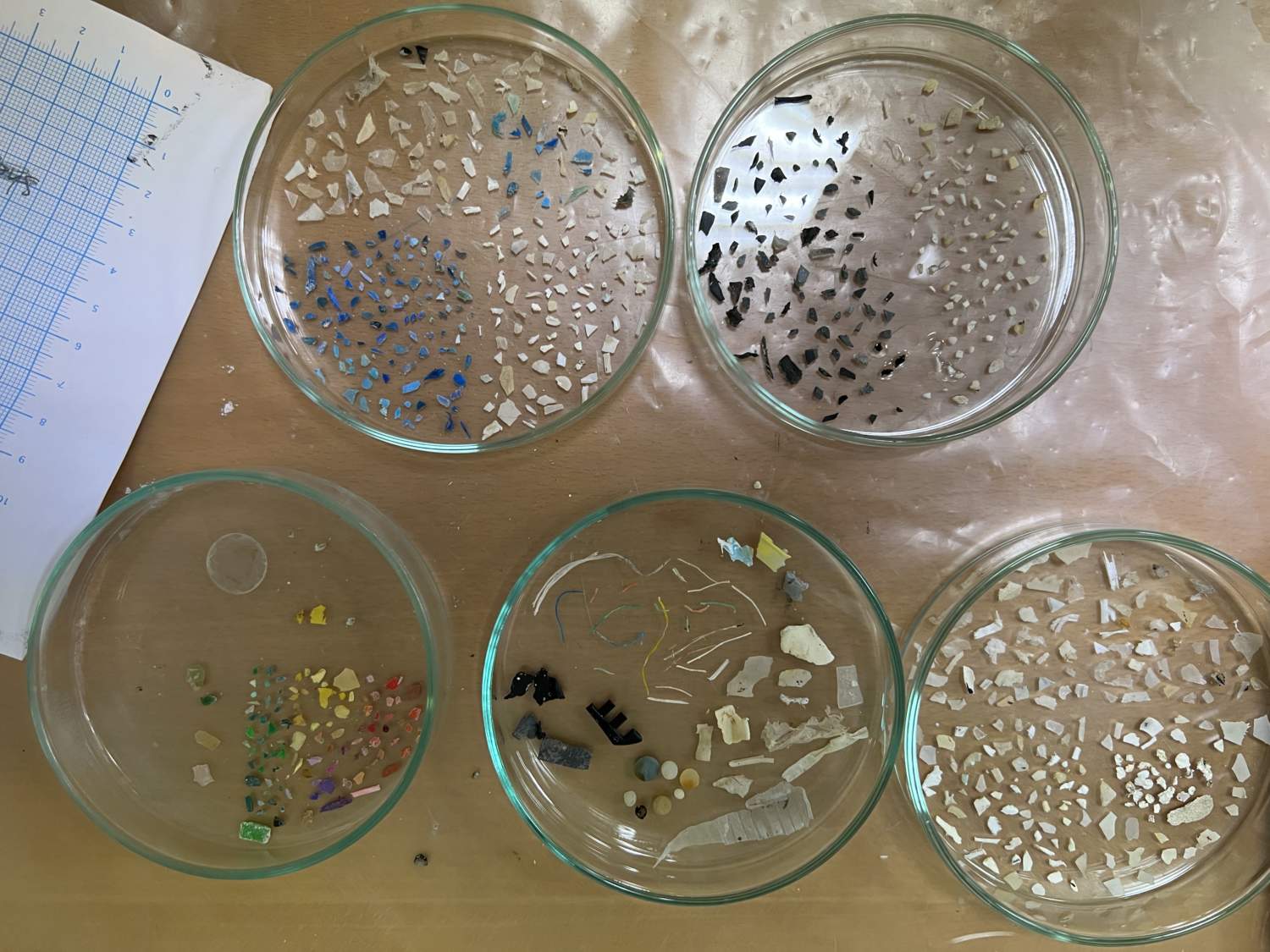
The study also introduces a classification approach integrating microplastic, mesoplastic, and beach macrolitter data to distinguish between sites dominated by sea-based versus land-based pollution sources.
“This work highlights the critical role of ocean currents and exposure in shaping coastal pollution patterns,” Dr. Savva said. “Our approach can support more targeted and effective coastal management, helping authorities prioritise cleanup and prevention efforts.”
The research was conducted by Dr. Savva and co-author Dror L. Angel through a collaboration between the University of Haifa and the Oceanography Centre, University of Cyprus.