

The Embassy of Iran in Cyprus has alleged that joint US and Israeli airstrikes on Tehran in the winter of 2026 caused serious damage to Iranian cultural heritage sites, including Golestan Palace and Arg Square.
It describes this as a clear violation of international humanitarian law.
The allegations come as UNESCO has issued fresh warnings over the fate of heritage sites in Iran and renewed its call for maximum restraint to spare what it describes as the social foundation of societies.
In a press statement issued to Cypriot media on 2 April, the Embassy said the intensity of explosions around Arg Square and Golestan Palace was significant enough to damage parts of both historic sites despite protective measures. It said the alleged damage was not limited to the capital, with cultural and historical sites across multiple provinces also affected, including Isfahan, Kurdistan, West and East Azerbaijan, Lorestan, Ilam, Bushehr and Kermanshah.
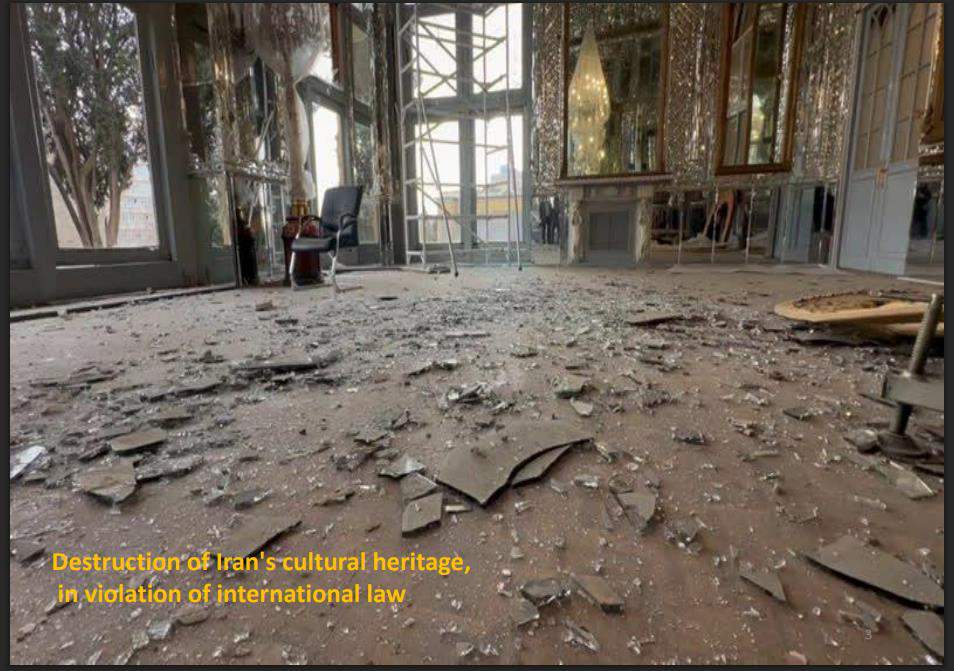
The scale of the damage appears significant. Ahmad Alavi, head of Tehran city council’s heritage committee, said last week that airstrikes had damaged at least 120 culturally or historically significant sites across the country since the start of the war. He named among them Tehran’s Marble Palace, Teymourtash House, and the Saadabad Palace complex. Iran is home to 29 UNESCO-listed sites.
Damage to Golestan Palace, a Qajar-era monument whose mirrored ceilings, windows, and archways were impacted in early March, was reported by AP on 3 March 2026. Strikes on Isfahan targeting the governor’s building also damaged the interior of the 17th-century Chehel Sotoun Palace, which is near the building, and the Ali Qapu Palace, where damage to intricate interior tilework has been reported. Shockwaves from the same strikes reportedly damaged the Masjed-e Jameh, the oldest Friday mosque in Iran.
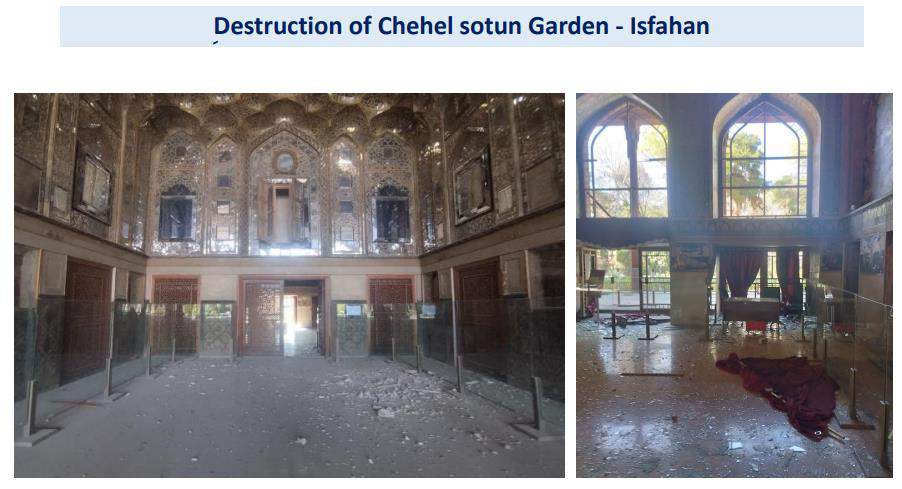
Iran’s minister for culture and tourism, Reza Salehi Amiri, described the destruction as a “deliberate and conscious attack” on Iranian identity in an exclusive interview with Al Jazeera. “We are not talking about stone and mortar,” Amiri said. “We are talking about the memory and history of a people. This stone represents who we are.” Amiri argued that even during the 1980s war with Iraq, Iran’s historical monuments remained largely shielded from systematic destruction. “What we see today is a total collapse of the moral and legal rules that used to govern conflicts,” he said. “The targeting of these sites is a dangerous development, not just for Iran, but for the global idea of heritage protection.”
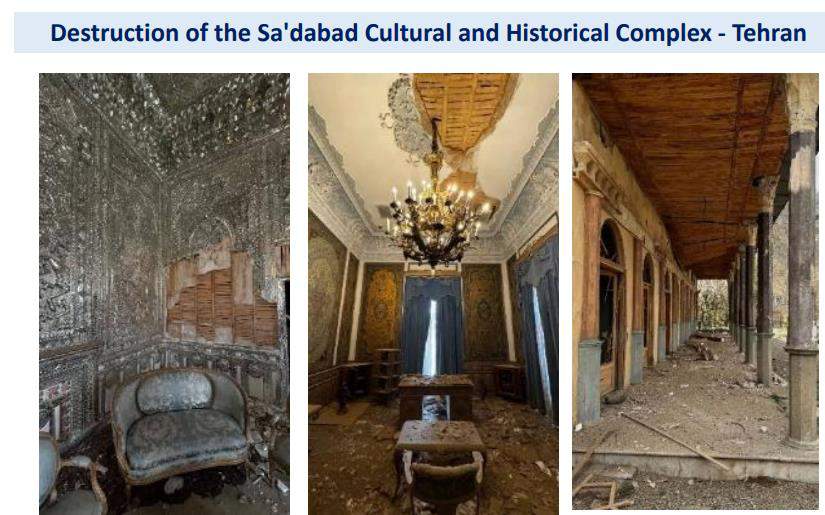
UNESCO confirmed that several sites of cultural significance in the region had been reported as impacted and damaged, and said it had communicated the geographical coordinates of World Heritage sites and sites of national significance to the parties to the conflict to avoid their being targeted. The agency reiterated the obligation of all parties to respect international law.
The Embassy cited three international legal instruments supporting its position. Under the 1954 Hague Convention for the Protection of Cultural Property in the Event of Armed Conflict, particularly Articles 4 and 19, cultural property must be protected even during armed conflict. The 1972 Convention concerning the Protection of the World Cultural and Natural Heritage similarly requires states to respect and safeguard such heritage. The Embassy also cited UN Security Council Resolution 2347 of 2017, which explicitly defines the destruction of cultural heritage as a criminal act.
The Embassy argued that sites such as Golestan Palace and Falak-ol-Aflak Castle have never served military purposes and cannot be considered legitimate military targets. It described the attacks on Iranian cultural and historical sites as a clear violation of international obligations and a serious offence against the heritage of humanity. The statement said it serves as an introduction to a broader report documenting the extent of damage across different Iranian provinces.
Read more: