

Farmers in Aradippou have begun installing disinfection tanks themselves amid mounting fears that foot-and-mouth disease is spreading and taking on alarming proportions. With support from the Aradippou municipality, they are moving to protect their livestock while voicing strong complaints against the state, accusing it of failing to act swiftly with protective measures.
Aradippou ranks first in Cyprus for milk production. Its livestock zone holds one of the largest herds in the country, backed by investments worth tens of millions of euros. Farmers warn that if foot-and-mouth disease reaches the municipality’s livestock area, the consequences will be severe.
Speaking at the site where the tanks are being installed, Mayor Christodoulos Partou said the municipality had taken the initiative and was preparing measures to prevent what has already occurred in Livadia and Voroklini. “We are preparing two disinfection tanks right now and in total around seven or eight will be installed. At the same time, we will close roads to limit access to livestock units. This is a very difficult situation. The state could have announced a comprehensive plan for all units. We are not panicking but we must act,” he said.
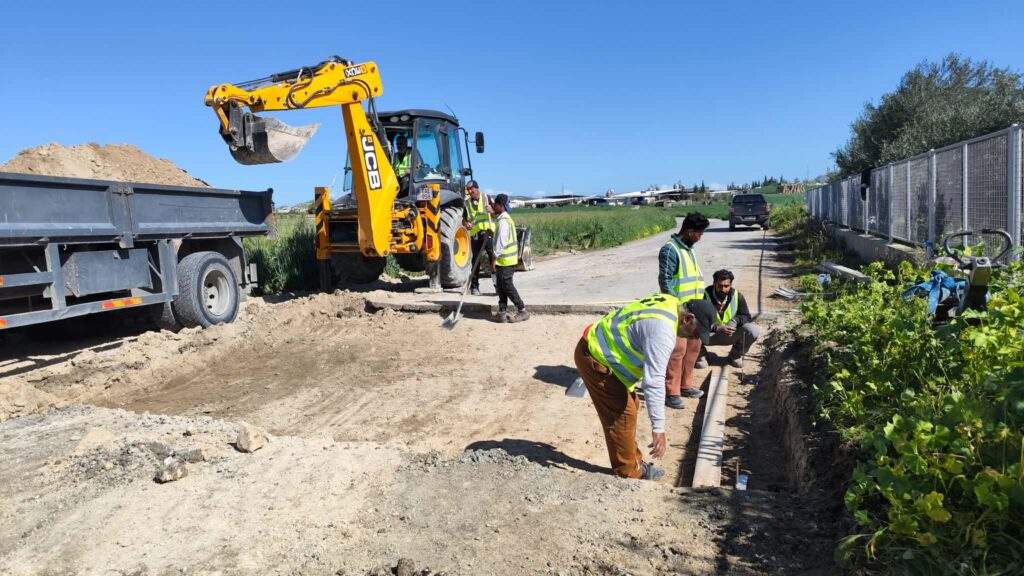
Andreas Symeou, a livestock farmer in Aradippou, thanked the mayor for responding immediately to the farmers’ call. “We are in turmoil. We invested a lot of money, our lives and our property in this work to support our families and the economy of Cyprus. That is why we are here today while the works are under way. We sprayed our farms, we sprayed the roads and we will stay here with the crews until these works are completed,” he said.
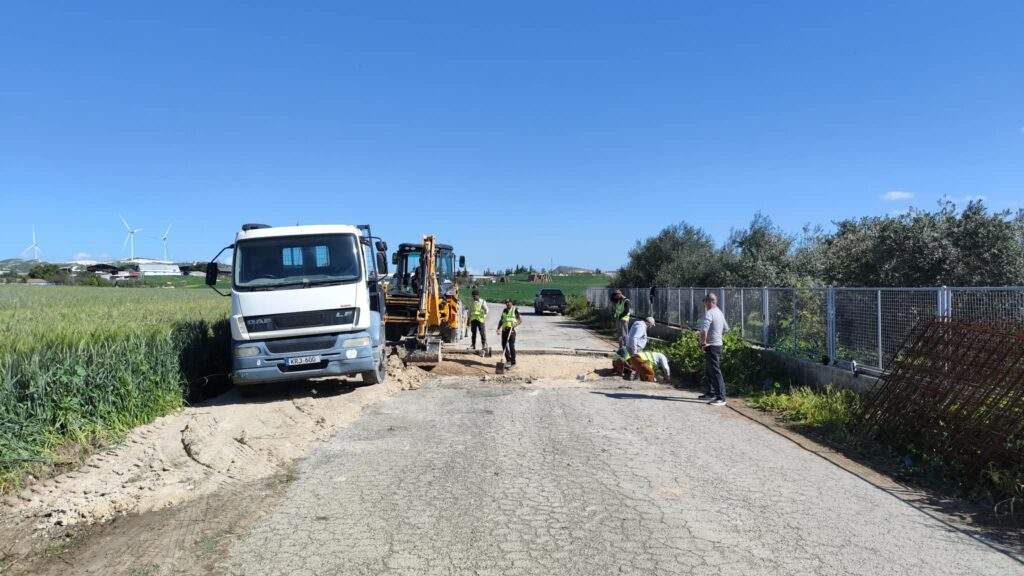
Asked whether he had expected the state to take such measures, he said yes, adding that this was the responsibility of the competent services. “Unfortunately, if they do not change the way they operate, we will keep seeing such incidents,” he added. He also clarified that sampling checks have not yet begun in Aradippou.
Michalis Constantinou, a dairy farmer in the area, said producers were trying to protect their property themselves during the holiday period. He added that when the disease appeared in the occupied areas, all farms in the government-controlled areas took measures. “If some producers brought animal feed from the occupied areas, that is criminal. It is up to the state to find the cause of the transmission,” he said.
In a separate development, livestock farmer George Demetriou, at whose unit animals tested positive for foot-and-mouth disease in Voroklini, told our website that the Veterinary Services had asked them to identify a burial site for the animals, which they had done. He added that if culling is ultimately decided, around 4,500 animals from his unit and the neighbouring unit, where positive cases were also found, will be put down. Farmers whose units have tested positive continue to record animal deaths.