

Farmers in Oroklini concealed foot-and-mouth disease symptoms in their herds for around two weeks before reporting them, allowing the virus to spread across Larnaca district, according to Veterinary Services.
Cyprus is now racing to vaccinate more than 170,000 animals in what authorities describe as a make-or-break effort to contain the outbreak.
Laboratory results dated 21 February 2026 indicate the virus entered the Oroklini farms — identified by authorities as ground zero — roughly two weeks before it was declared.
Criminal proceedings have been initiated under Article 6 of the Animal Health Law against farmers who failed to report the disease. Investigators from the Larnaca CID have begun taking statements from farm owners, their vets, and other animal health professionals, though the probe is at an early stage and no clear direction is expected until specialised laboratory tests on animals and feed are complete.
Statements have also been taken from Veterinary Services officials, following public complaints from Oroklini farmers that proper measures were not taken before and after cases were detected at their units.
Mass vaccination under way
The vaccination campaign began at a cattle farm in Aradippou and targets 170,801 animals within the 10-kilometre surveillance zone: 25,613 cattle, 97,021 sheep and goats, and 48,167 pigs. Teams are prioritising livestock within the inner three-kilometre radius before expanding outward. All farmers whose animals are to be vaccinated were briefed yesterday on procedures, and producers have been told that meat and milk production can continue normally after vaccination.
Vaccine supply is being drawn from three sources. Ten thousand doses arrived yesterday from the Turkish Cypriot side; a further 50,000 are expected today, also from the north — possible because the SAT1 serotype circulating in Larnaca is the same strain found across the ceasefire line. A further 529,000 doses are due from Brussels next Saturday.
Pig farmers have not yet given their consent to vaccination. If they do, a request for specialist swine vaccines will be submitted, with delivery expected within 10 days.
Culling and containment
At the 11 farms already confirmed as infected, around 13,000 animals are to be culled without prior vaccination to eliminate the transmission source as quickly as possible. Culling of 263 cattle is complete; operations continue at 10 remaining sheep and goat units. Hay and feed are being destroyed and disinfection is under way.
“These animals will be buried in accordance with protocols, and the facilities will remain closed for at least two months for disinfection,” Veterinary Services spokeswoman Soteria Georgiadou said.
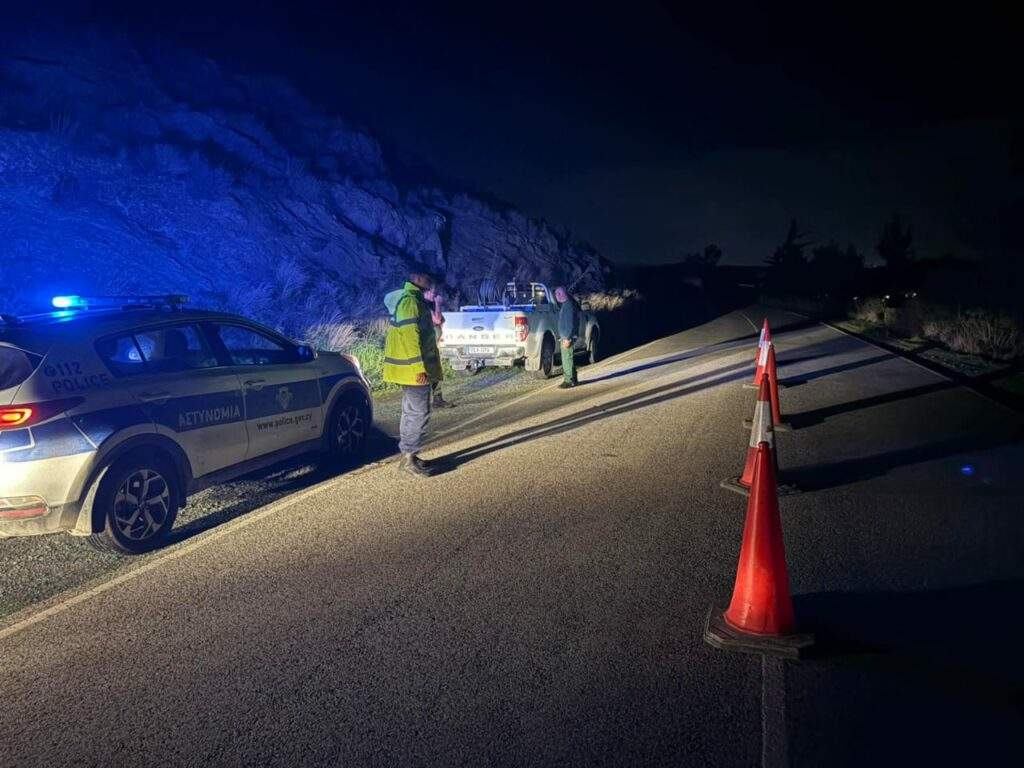
Checkpoints have been increased from 15 to 21, focused on the Athienou and Kellaki areas.
Government response
Agriculture Minister Maria Panayiotou assured consumers that meat and dairy products are safe, saying the virus is fully neutralised through pasteurisation and cooking above 90°C. “We have secured halloumi exports,” she said, adding that financial support measures for farmers would be announced shortly.
The Minister noted that no EU member state has carried out preventive vaccinations, and said she had personally met with the relevant European Commissioner to secure swift vaccine delivery.
What comes next
The situation will be reviewed in 15 days. If test results from farms outside the current zone warrant it, vaccination could be extended to the rest of government-controlled Cyprus. Authorities say six months of strict surveillance after the final vaccination will be needed to prove the virus is gone — a prerequisite for regaining Cyprus’s disease-free status, a process that could itself take up to two years.
Before the outbreak was confirmed in government-controlled areas, Veterinary Services had conducted 130 inspections and collected 3,799 samples from within the three-kilometre buffer zone along the ceasefire line, following detection of foot-and-mouth in the occupied territories.
Read more: