

The Shahed drone that struck the British Bases at Akrotiri on March 1 caused only minor material damage. Still, it has had wider repercussions inside Cyprus, with the tourism sector now under pressure as the summer season approaches.
A mix of isolated events and risky public messaging that gave the impression Cyprus was at war helped create the current situation, leaving the government and the Deputy Ministry of Tourism trying to reverse what is being described as a negative and distorted perception abroad, even though daily life on the island remains normal.
The image of Emmanuel Macron, Kyriakos Mitsotakis and President Nikos Christodoulides standing in front of a military helicopter at the Andreas Papandreou air base in Paphos on March 9 sent mixed signals. It strengthened the sense of security at home and was seen as a sign of European solidarity. Still, it also helped reinforce the impression abroad that Cyprus was part of the conflict and raised doubts over whether it was a safe holiday destination this year.
Macron’s incorrect reference to multiple missile and drone attacks, although later corrected in Cyprus, remains unchanged on his social media accounts and has drawn millions of views worldwide.
Foreign media in key tourism markets also focused on Cyprus in the days after the attack on the British Bases. Media coverage was especially significant in countries that are major suppliers of tourists to the island.
Some 53,267 tourists arrived in Cyprus from the United Kingdom in 2025, prompting extensive coverage in the British press. The Guardian, in a report published on March 8 under the headline “People are thinking twice: Cyprus feels fallout from Iran war on tourism”, said no country in Europe or the Mediterranean would be affected more than Cyprus. Cyprus was presented as being clearly in a danger zone, while the British Foreign Ministry travel advice continued to warn that terrorist acts could not be ruled out.
The Anglo-Cypriot community in Britain has objected to those warnings, with its council writing to the Minister of State for Europe to protest that the travel advice harms Cypriot tourism and should be revised.
The Telegraph also included Cyprus in a travel report headlined “Ten ways the Middle East war will affect your next holiday”. The report noted weaker demand for holidays to Cyprus after the strike on the Bases and carried comments from Jet2’s chief executive saying people were not booking Cyprus and Turkey and that cancellations were rising. He also said he expected bookings to rise sharply once the war ends.
German outlet Euractiv, in a report published this week, focused on what is being described as the Deputy Ministry of Tourism’s more aggressive campaign to convince markets that Cyprus remains a safe destination. In a report headlined “‘Not a war zone’: Cyprus tourism fights back”, it said Cyprus was pushing back against safety concerns linked to the conflict in the Middle East and trying to protect the coming summer season. It also included comments from Deputy Tourism Minister Kostas Koumis, who said: “We are not in a war zone. We are hundreds of kilometres away, the map just gives a different impression.”
Just three nights before the Hezbollah drone attack on Akrotiri, Koumis had presented the ministry’s review of 2025, described as a record year for Cypriot tourism.
According to figures presented by Koumis, tourist arrivals topped 4.5 million for the first time, up 12.2% from 2024 and 41.6% from 2022. Revenue for the January-November period rose 15.3% year on year, while total revenue over the 2023-2025 period reached a record 9.9 billion euros.
Tourism’s contribution to Cyprus’s economy also rose, with its share of GDP reaching 14% from 13.1% a year earlier. Average spending per visitor rose 2.9% to 822 euros, while daily spending increased 7.2% to 99.5 euros compared with 2024. Despite a small drop in average length of stay to 8.27 days, overnight stays rose 3.3% to 18.5 million. Cruise tourism doubled to 278,000 passengers, up 104% from 2024, while agritourism rose 3% from the previous year to more than 90,000 arrivals and was up 40.9% over three years.
The current picture, around a month after the Akrotiri strike, is less encouraging. Cancellations for March and April reached 40% to 50%, while many cancellations are also being recorded for May and summer bookings are moving at what is being described as a worryingly weak pace for this time of year.
Reuters also reports that cancellation rates for short-term rentals in Cyprus jumped from about 15% before the conflict to 100% in the days afterwards, according to AirDNA, which tracks such bookings. That rate has since fallen, but remained around 45% up to March 21.
As part of an eight-measure package announced by the government on Thursday to ease pressure on households and support the real economy, two measures were aimed specifically at hotels and tourism. The government decided to subsidise 30% of wages for employees in the hotel industry for units and tourist accommodation operating throughout the period from April 1 to April 30, 2026. It also drew up a plan for further support for airlines to safeguard Cyprus’s uninterrupted links with key tourist markets.
Later the same day, Koumis said there were signs of a recovery in tourism after the earlier geopolitical pressure. He said bookings had shown a trend towards recovery in recent days and stressed the importance of Cyprus’s presence at the ITB tourism fair in Berlin, calling it crucial in getting across to strategic partners the message that the country remains a safe destination and that tourism activity is continuing as normal.
The Deputy Ministry of Tourism is also examining the possibility of offering incentives to Cypriot citizens to boost domestic tourism.
Koumis said: “Tourism, as a sector of the economy that is affected by external factors, is naturally often called upon to adapt to unpredictable developments.
“The Government and, by extension, the Deputy Ministry of Tourism, over the past three years, has had to manage on at least two occasions the adverse consequences of geopolitical tensions in the Middle East region, which had also then created conditions of uncertainty for tourism in the wider region.
“In all cases, through coordinated actions by the Government and the entire tourism ecosystem, Cypriot tourism proved its resilience and responded successfully to the challenges. This resilience is the result of the sector’s successive successful years.
“In relation to the current situation, as the Deputy Ministry of Tourism, we have from the outset been in continuous contact with the tourism industry, inside and outside Cyprus, so that we constantly receive updates on the course of tourism and all current developments.
“It is noteworthy that within just a few days, all European airlines fully restored their flight schedules to our country, which demonstrates their confidence in the Republic of Cyprus, the Government and the destination.
“In addition, an intensive campaign has begun abroad to make it clear that our country remains a safe destination for visitors and that tourism activity continues without disruption, something that is also demonstrated by all those international sporting and cultural events taking place across Cyprus.
“There is no doubt that our country is among the safest countries in the world, and at the same time, we remain an extremely popular destination, fully ready to provide high-level hospitality as every year.
“We remain optimistic, based on the spirit of good cooperation and the resilience of the sector, for a good tourism year, for the benefit of the state, businesses, employees in the sector and local communities.”
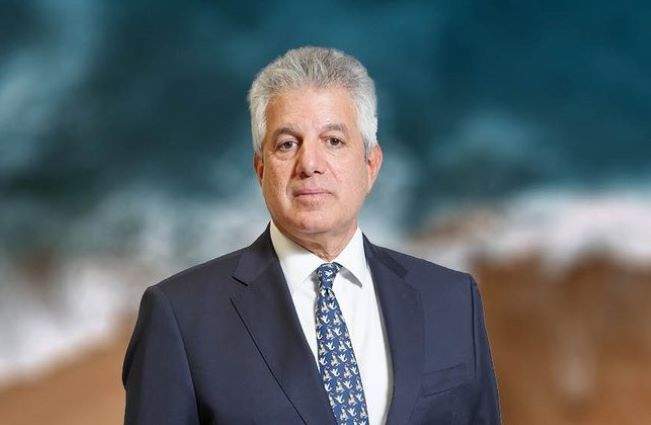
Thanos Michaelides, president of the Cyprus Hoteliers Association (PASYXE), said: “The war in the wider region has once again highlighted the vulnerability of the tourism sector to external crises. Cyprus, as a quintessential tourist destination, is directly experiencing the effects of geopolitical instability, with uncertainty affecting both demand and visitors’ planning. At the same time, it remains critically important to preserve the message that our country is a safe and reliable destination, especially for the European market.
“The picture at present confirms that visitors already in Cyprus are enjoying smooth and pleasant holidays, which strengthens the destination’s credibility. However, uncertainty has clearly affected demand, especially during March and April, when cancellations and lower occupancy were recorded, in some cases on a significant scale, taking into account also the reduced operation of units during the winter period.
“The first signals for this year remain cautious, with signs of resilience but also clear challenges. April, as the month marking the start of the tourism season and combined with Catholic Easter, appears to have been affected the most, while the course of the following months will depend to a large extent on developments in the wider region and the broader climate of confidence in the markets. Despite signs of stabilisation, uncertainty remains strong and the situation is still characterised by volatility, making any safe forecast for May difficult.
“In relation to the measures that have been announced, it is recognised that they are an initial attempt to support employment and the operation of tourist units. Nevertheless, based on the data so far, it is not clear whether they are sufficient to cover the full range of challenges facing the tourism sector. As important clarifications are still pending regarding their implementation and scope, it is advisable to avoid hasty conclusions. The coming period will allow a more complete assessment so that, if gaps are identified, additional interventions can be considered based on the real needs of the sector.
“Tourism cannot operate in isolation. It requires coordination, flexibility and a timely response to constantly changing data. Close cooperation between the state and the private sector remains crucial to safeguard the sector’s resilience and limit the impact of uncertainty. In periods like the present, calm, a realistic assessment of the data and adaptability are key elements in managing the situation.”