

Famagusta Police are conducting intensive investigations to identify and arrest all those involved in a clash that broke out in Xylophagou on Wednesday night.
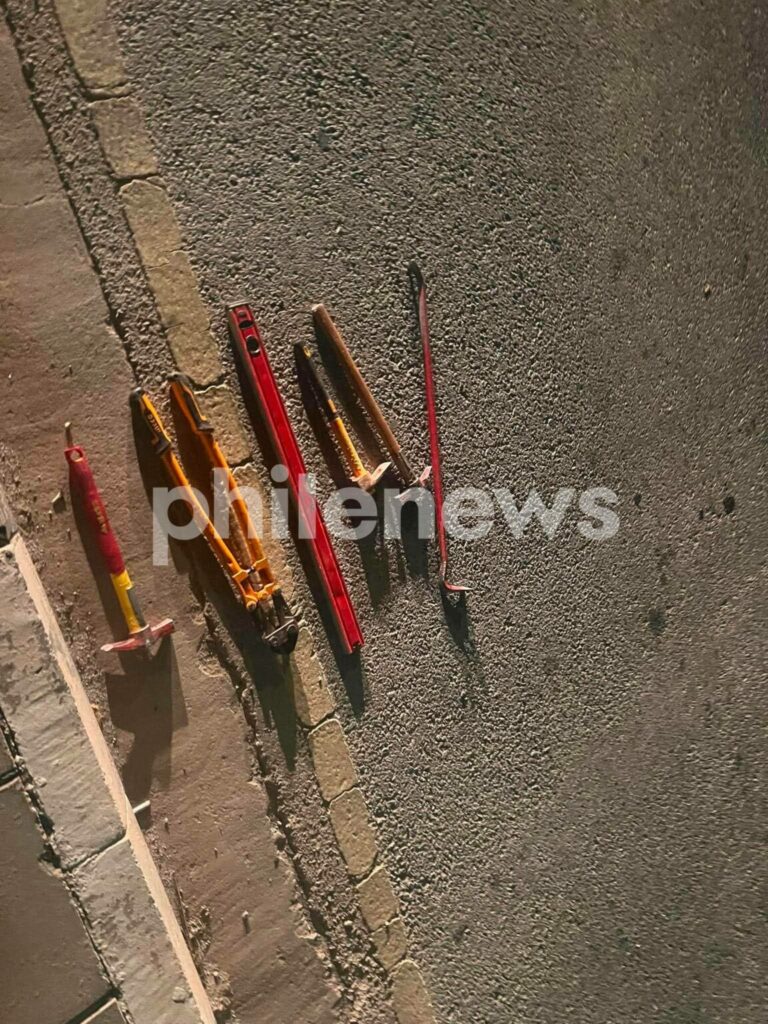
Around 20 people took part in the incident, some of whom, according to eyewitnesses, were carrying hammers, crowbars and sharp objects.
One of those involved attempted to strike members of a rival group with his vehicle, which ended up crashing into a nearby property and causing damage.
According to philenews information from police sources, the owner of that vehicle has been identified and an arrest warrant has been issued against him. A 27-year-old man, arrested yesterday afternoon, was brought before Famagusta District Court in Paralimni for a detention order to be issued against him. He is the owner of a second vehicle found at the scene.
Investigators are also examining CCTV footage in an effort to identify further individuals. According to information, another 10 to 15 people believed to have been involved in the clash are being sought.
Police were informed of the incident at 9.40pm on Wednesday, with those involved leaving the area in haste, but leaving behind significant evidence, including the vehicle involved, hammers, crowbars, knives and bags.
Xylophagou community leader Giorgos Ioulianos told philenews that when he arrived at the scene at around 10.30pm, there was major disruption, as people sitting in the street had seen a car speeding towards people.
He said he was told at the scene that the problem stemmed from financial disputes between groups, with one group confronting another using crowbars, wooden sticks and sharp objects, adding that most of those involved live in the community. Ioulianos cited information suggesting some of those involved act as “employers” who supply foreign workers’ labour to contractors.
Ioulianos said he believed the incident stemmed from a lack of strategy in managing foreign labour. Speaking in his capacity as a former trade unionist, he said the practice amounted to a “slave market,” allowing anyone to register workers under their own name and then “sub-let” them elsewhere, questioning how someone could be paid for supplying workers to others while underpaying those workers in the process.
Ioulianos said the employers in this case supply workers for construction work, and that failure by some to honour agreements had led to the formation of rival groups.