

The escalating tensions in the Middle East have brought energy security sharply back into focus, raising urgent questions about the true resilience of global markets. With the Strait of Hormuz a constant flashpoint in geopolitical confrontation, anxiety over potential fuel shortages — jet fuel in particular — has been mounting just as the summer travel season approaches. Those fears intensified after IEA Executive Director Fatih Birol painted a stark picture, warning that Europe may have only six weeks’ worth of aviation fuel in reserve.
Yet behind the dire headlines, the data tells a more complex and considerably more reassuring story. Michalis Mathioulakis, Academic Director of the Greek Energy Forum and research associate at ELIAMEP, tells Phileleftheros that global energy markets have shock-absorption mechanisms, strategic reserves, and alternative supply routes capable of preventing a genuine shortage scenario — even in the event of a serious escalation.
He considers an actual fuel shortage unlikely under even the most extreme scenarios — though that does not mean the crisis will be without significant consequences. In his assessment, the key variable determining whether flights are cut or cancelled is not the availability of jet fuel but the surge in its cost. “This will clearly affect tourism and the travel market — though not uniformly, since not all destinations are equal,” he explains.
At the same time, the crisis is throwing up both challenges and opportunities for countries such as Cyprus and Greece as it reshapes the balance of power in energy and geopolitics. Mathioulakis argues that their strong ties with Egypt will prove advantageous for both Nicosia and Athens. Furthermore, renewed interest in their hydrocarbon reserves is looking increasingly likely, as the search for alternatives to Gulf energy gathers pace.
Is there a realistic prospect of fuel shortages in the coming period as a result of the war in the Middle East?
I consider it quite unlikely that we will see fuel shortages at any stage of how this conflict develops. Even if the Strait of Hormuz remains under its current restrictions, there will be no supply problem.
Would that hold even if Iran imposed transit fees and made navigation through the Persian Gulf significantly more expensive?
Even if that were to happen — or even if the supply of oil and gas through the Strait of Hormuz were to stop entirely — I believe the global market holds sufficient quantities to meet demand, which will in any case be lower than usual. The combination of reduced demand driven by the situation itself, IEA strategic reserves of 400 million barrels now beginning to enter the market, Chinese reserves of over one billion barrels that have gradually started to be drawn upon, and the pipelines that Saudi Arabia, Iraq, and the UAE have in place to bypass the Strait — all of this together would cover even a complete closure. The global market can bridge the gap, even if there is some turbulence along the way.
How do you assess the IEA director’s statement — which caused considerable alarm — that Europe has only six weeks of jet fuel?
I think it was a hasty and rather careless remark. He is, of course, an experienced technocrat and I am sure he did not say it without some basis. However, he did not disclose what data underpinned that conclusion. The way the comment was communicated is reminiscent of an earlier IATA study, whose finding was that Europe’s dependence on Gulf states had grown because the number of European refineries producing jet fuel had declined. And I would note here that the leading producers of jet fuel are the United States and South Korea — with the UAE only ranking eighth — while the leading exporters of kerosene are China, Kuwait, and Saudi Arabia. The fact that such a senior official made this kind of statement, at such a critical juncture, without citing any data, does give me pause as to how much weight one can place on assessments of this kind.
Where does Europe source its jet fuel from?
Up to 2024, Europe was producing around 70 per cent of its aviation fuel at European refineries. By 2025, that figure had dropped to roughly 50 per cent. And it is worth noting that even within that 50 per cent dependency, roughly half of Europe’s total demand comes from the United Kingdom. It should also be pointed out that all EU member states are members of the International Energy Agency and are obliged to maintain oil reserves for a minimum of 90 days. That means that even if oil supplies to an IEA member country were cut off entirely, stored volumes would be sufficient to keep it running at full capacity for three months.

How does rising oil prices feed through to jet fuel?
Crude oil is, of course, the primary feedstock for fuel production, which is why prices have risen so sharply. In the case of jet fuel, the increases we are seeing are even more pronounced. Which refineries produce which refined products depends on the choices and technical capabilities of each facility. The reason some have specialised in jet fuel and others have not comes down to cost — specifically, how cheaply the product can be made. South Korea leads in jet fuel because its refineries have the technology to produce it at competitive prices. Europe did not make those investments, so its refineries fell behind, and those that could not compete on price ended up closing.
If the Gulf crisis drags on and we reach the point of flights being cancelled or significantly reduced, are there measures that could address the situation — or will the travel market simply seize up?
Flight reductions are already happening, but so far they are all precautionary. Based on published data, airlines are cutting routes that did not have sufficient load factors to support the increased fuel costs. Routes that may have been viable at $70 a barrel are no longer economical at current prices with lower occupancy. If the crisis continues and prices remain at these levels for an extended period, we should expect to see more of the same from airlines. This will clearly have an impact on tourism and the travel market — and of course not all destinations are affected equally. A London to Edinburgh flight is a very different proposition from Athens to Larnaca or Brussels. I will reiterate: it is the cost of fuel, not its occupancy rates, that will determine the scale of flight cancellations.
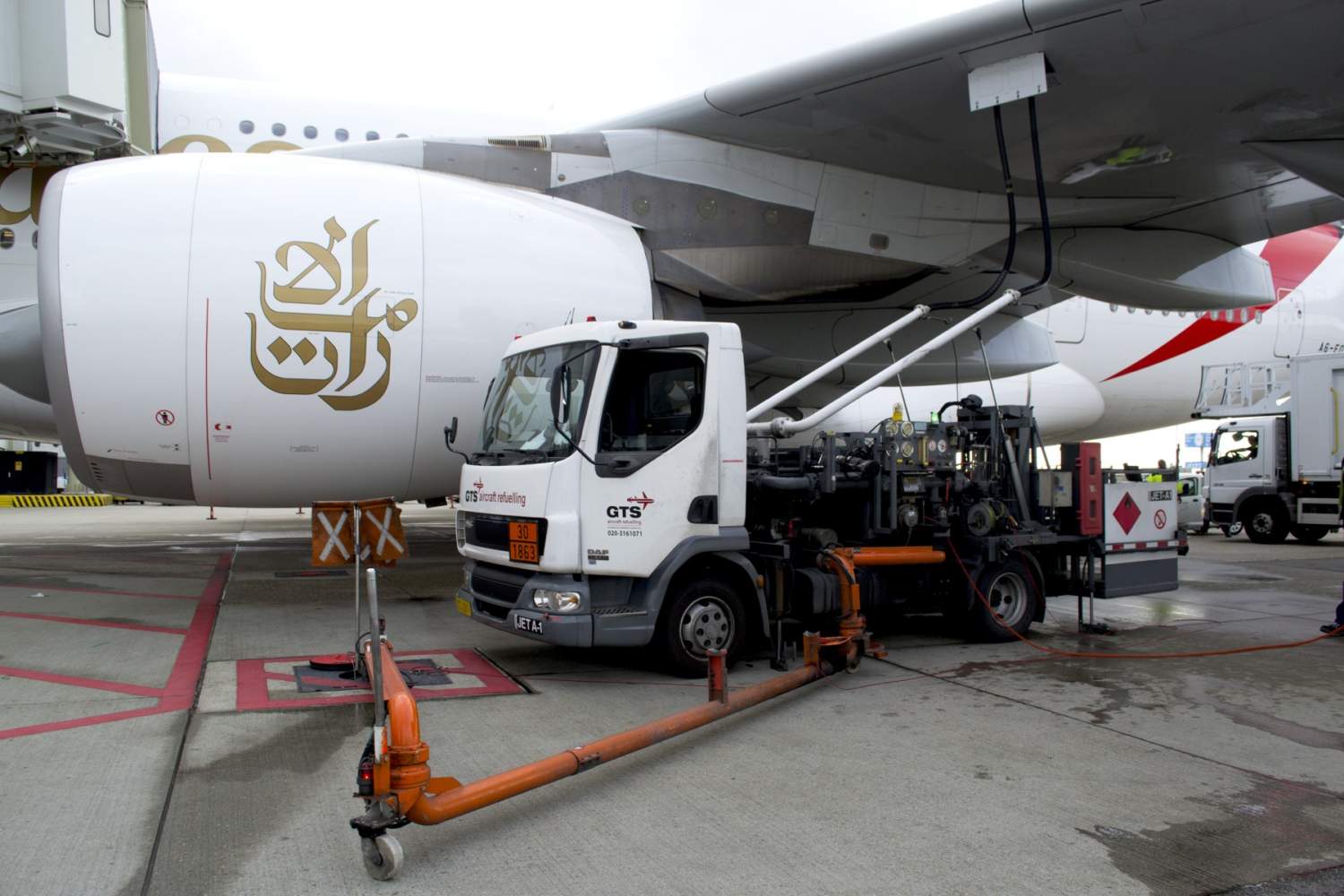
The war has already caused significant turbulence in energy markets. If hostilities were to end soon, how long would it take for conditions to normalise — and I am not just referring to prices, but to reserves and trade flows?
Apart from prices, the other issues are not particularly significant, precisely because we have not seen fuel actually disappear from the market. So I do not think we will notice a major difference in terms of how long it takes to replenish the quantities currently absent. Normalising shipping through the Strait once it reopens is a matter of weeks, not months. The one exception will be Qatar’s natural gas infrastructure, which has sustained damage and may take considerably longer to return to pre-conflict operating levels.

What about pump prices and electricity bills?
Electricity bills vary from country to country. A country like Cyprus, where power generation is heavily tied to oil prices, will likely have seen sharper increases than somewhere like Greece. If prices fall within one to two weeks, that should be reflected at the pump fairly quickly and in electricity bills within a month. In Greece, for example, where the market is far more influenced by renewable energy and natural gas prices, the increase in electricity costs has not been as severe. On this point, I should add that it is important for Cyprus to build interconnections with other countries. That said, pump prices are also a question of how rigorously each country enforces its price-gouging regulations. The fact that prices at the pump jump the day a crisis breaks out, but can take two months to come back down, is a question of how well the market is functioning and how closely pump prices are tied to refinery gate prices. It is the responsibility of each government to ensure that.
Geopolitical shifts with implications for Cyprus
How is the global energy landscape being reshaped by the Middle East war, and how can Cyprus and Greece leverage developments to advance their economic and geopolitical interests?
Over the longer term, two things are likely to change. The direction has already been set: the Gulf states, with the exception of Iran, are actively seeking to reduce their dependence on the Strait of Hormuz as the channel through which they export their energy to international markets — their reliability has taken a serious blow, and that is something they simply cannot accept, any more than they can accept Tehran imposing transit fees.
The first shift is that they will seek alternative routes for their oil and gas. What does that mean in practice? One option is to route westward, towards Egypt. My assessment is that the only viable pipeline route for Gulf oil and gas runs through Egypt, which is a country on good terms with the others in the region. It will not go through Israel, Syria, or Turkey. A route through Syria and Turkey would not resolve the dependency on unreliable transit states — reducing dependence on Iran only to become dependent on Syria is the same problem in a different guise.
Various scenarios, many of them floated by Turkey itself, involving pipelines through Syria, I do not believe will materialise. Egypt, however, is a genuine destination, and a shift in that direction represents a significant change. Cyprus and Greece stand to benefit from the strong ties they maintain with Cairo — and as Egypt’s strategic importance rises, that matters greatly for its friends.
And in terms of the two countries’ own energy prospects?
The rest of the world is now beginning to revive interest in hydrocarbon energy sources that are not linked to the Persian Gulf. Offshore and onshore blocks where there were advanced indications of hydrocarbon potential but which companies had put on the back burner — uncertain about how demand dynamics would evolve — can now be revisited, as everyone is looking for ways to replace Gulf volumes. In that environment, priority will go to reliable countries and mature projects.
On both counts, Cyprus and Greece have advantages. Cyprus has blocks beyond Aphrodite and its existing agreement with Egypt that the major companies may well take another look at. In Greece, there is interest in Block 2 in the Ionian and in Crete. And we should not forget that both are EU member states. Even smaller volumes, such as those Cyprus holds, now carry real weight and significance — so I do expect renewed interest from the industry.