

The vision for a society where Roma have equal opportunities and participate actively without experiencing exclusion or discrimination was shared with Phileleftheros by Dr Chryso Pelekani, president of the Roma Association and Friends and a specialist at the University of Cyprus Language Centre. Speaking on the occasion of International Roma Day, celebrated annually on 8 April, she emphasized the need for systemic change.
Ayşe Esenrüzgar, the association’s vice president and a member of the Roma community in Limassol for 20 years, expressed a desire for a future where her children can grow up without feeling inferior. She highlighted the importance of a society characterized by acceptance, understanding, and equal opportunities for all, where people can express themselves freely without fear.
The Roma are a dispersed nation of 12-15 million people globally without a state. In the Republic of Cyprus, the population currently stands at approximately 800. Following the opening of the checkpoints in April 2003, many Roma groups moved from the occupied areas to settle in socio-economically disadvantaged urban districts, primarily in Limassol and Paphos.
Education and the gap in higher learning
Education remains a critical area for the community. Many Roma children attend the 18th (IH’) Saint Antonios Primary School in Limassol, where teacher Maria Isabella Achilleos says they learn solidarity and respect through lessons, music, art, and theatre.
However, Dr Loizos Symeou, Professor of Sociology of Education at the European University Cyprus, noted that the school dropout rate among Roma in Cyprus remains high. Crucially, he pointed out that university education has not yet been achieved by any Roma individual in Cyprus.
Identity and linguistic variety
Dr Pelekani explained that under the Constitution, the Roma of Cyprus are not recognized as a distinct ethnic or minority group but are integrated into the Turkish Cypriot community. Formerly nomadic, most are now settled.
Officially, they self-identify as (Turkish) Cypriots, but unofficially they use the term “Kourpetes” (derived from the Arabic gharib, meaning stranger or foreigner). They speak Cypriot Turkish and Kourpetiki, with the latter linguistic variety used exclusively within close-knit family and social circles.
The Roma Association and Friends aims to empower the community through education and social inclusion. Dr Pelekani stressed that the goal is not to “speak for” the community but to act as a space for self-representation, building trust through years of field presence.
Literacy, housing, and social prejudice
Vice President Ayşe Esenrüzgar shared her personal journey, having only completed primary school. She described the association as a place that makes her feel stronger and provides a platform for those who often lack information on how to get involved.
Key challenges cited by the community include:
- Illiteracy: Difficulties in daily life and communication with state services.
- Language barriers: A lack of translators in health services leads to feelings of exclusion.
- Housing and Economy: Many families face financial instability and lack steady employment.
- Discrimination: Esenrüzgar noted that social prejudices and the derogatory use of terms like “gypsy” affect self-esteem and employment opportunities.
Inclusive practices at Saint Antonios Primary School
At the 18th Primary School of Saint Antonios, multiculturalism is treated as a daily reality. Teacher Maria Isabella Achilleos described the school as a “mosaic” where children of various backgrounds—including Turkish Cypriots, Roma, Romanians, Bulgarians, Russians, Syrians, and Filipinos—coexist.
Over the last six years, the school has aligned its practices with EU strategic frameworks to combat segregation and reduce early school leaving. The presence of a Turkish language teacher and the involvement of the Roma Association ensure that the community’s language and culture remain part of school life.
Music as a bridge for integration
The role of music is central to these inclusion efforts. Christina Karapataki, a music teacher and association committee member, highlighted the “Musical Polychromy” programme by the Limassol Municipality.

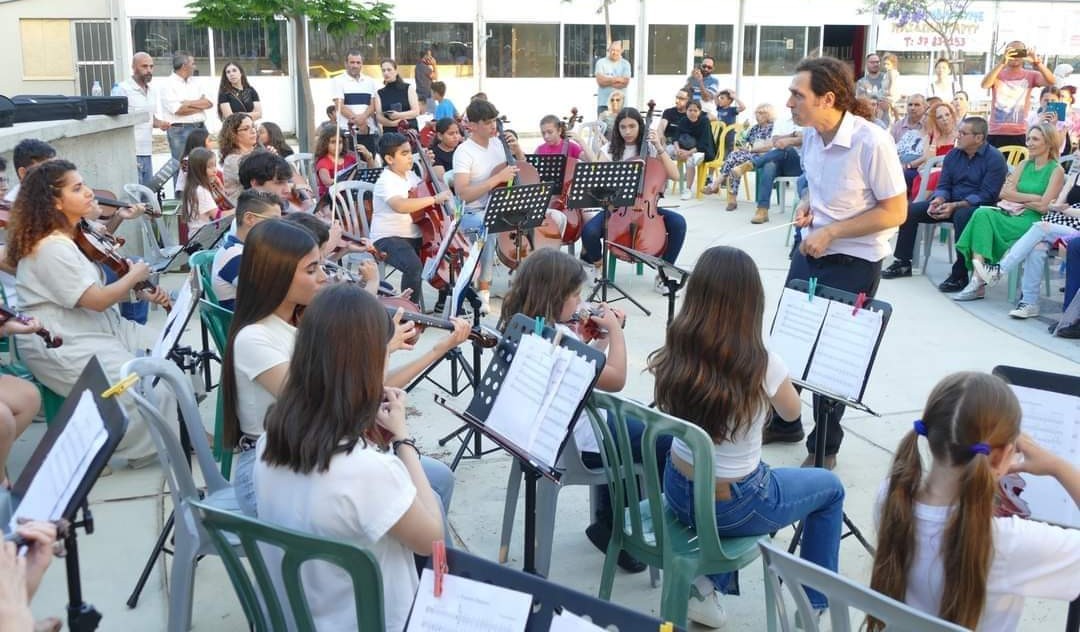
Implemented in collaboration with the 18th Primary School, the programme offers free lessons in string and percussion instruments twice a week. Children from different backgrounds, including Roma, participate in an orchestra, fostering intercultural relationships and confidence. Karapataki noted that many Roma children show remarkable consistency and talent, drawing on their community’s deep musical tradition.
Dr Pelekani concluded that while the negative social framework and “anti-gypsyism” remain obstacles, change is possible through mutual understanding and systematic support. The vision remains a society that recognizes diversity not as a threat, but as wealth.