

When Cyprus received an invitation on 17 January to join Donald Trump’s much-discussed “Peace Council” for Gaza, the government initially welcomed it as recognition of the country’s enhanced international standing. That positive mood quickly soured.
State leaders published the invitation’s contents verbatim, raising serious and well-founded concerns about Trump’s real intentions.
Suspicion has spread internationally that the Council aims to become an international body operating either in competition with the UN or replacing its role in conflict resolution. The number and identities of countries that attended the official Davos presentation and signed the founding declaration confirmed these fears.
Despite its initial warm reception of the planetary ruler’s invitation, the government subsequently approached the matter with caution.
Hours before the Davos presentation, the Foreign Minister confirmed Cyprus would ultimately be absent “for practical reasons,” adding that Brussels was working to formulate a common EU position. Hungary and Bulgaria were the only EU member states present in Davos.
The issue resurfaced early this week when Trump sent a fresh invitation to President Christodoulides and others to attend the first “Peace Council” meeting on 19 February in Washington. Nicosia assessed that the new invitation concerns exclusively Gaza reconstruction, prompting an initially positive response.
Among EU states, invitations also went to Greece, Spain, Germany, Italy, France, Bulgaria, Hungary, Poland and Sweden. Trump also invited Saudi Arabia, Qatar, Kuwait, Morocco, Bahrain, the UAE, Egypt, Indonesia, Jordan, Pakistan, Switzerland, the UK, Turkey, South Korea, Japan, Albania, Armenia, Azerbaijan, Kazakhstan, Kosovo, India, Australia, Belarus and Norway.
The UN resolution and Trump
On 17 November 2025, the UN Security Council adopted Resolution 2803, which constitutes the international community’s official framework for post-war Gaza management.
The resolution approves a specific peace plan to end hostilities, provides for a transitional governance period, authorizes deployment of an international stabilization force for security and civilian protection, sets oversight mechanisms and regular reports to the Security Council, and establishes a timeframe for implementing the transitional arrangement.
Essentially, the resolution provides the mandate and method through which the transition from war to stability and peace will occur within the UN institutional framework, with the final say resting with the international community as a whole, not individual states.
Donald Trump subsequently announced the formation of a “Board of Peace,” presented as an international platform for coordinating Gaza reconstruction, managing funding and investment, and politically overseeing the transitional period.
However, concern arose internationally both from public statements by the American President and from the council’s founding charter contents. Trump has suggested the initiative is not limited to Gaza but aims to become a “bold new model” for resolving international conflicts globally.
Meanwhile, analysis of the founding charter itself shows no explicit reference limiting the entity strictly to Gaza’s transitional administration and reconstruction. Instead, it notes the council will follow a bold new approach to conflict resolution, without specifying the geographical area where this will be applied.
Our decision, our responsibilities
The fact that not all EU member states received invitations from the American President has its own significance and distinct dimension. Because of this peculiarity, each invited country must operate autonomously—meaning it alone will be accountable for its actions and decisions.
“Each country will weigh its own facts,” Deputy Government Spokesman Yiannis Antoniou told state television last Wednesday when asked what Cyprus will do. Cyprus has no doubt about Donald Trump’s Gaza plan, he said, recalling President Christodoulides’ supportive proposal on the humanitarian component and security issue.
He confirmed that what various states, including Cyprus, view with reservation is the status this council will have in the international system. He stressed that the government under no circumstances wants any effort functioning to undermine or compete with the UN, on which the country relies to resolve its own national problem.
Between a rock and a hard place
The invitation to Cyprus to participate in Donald Trump’s so-called “Peace Council” is not an ordinary diplomatic invitation. It is not simply a matter of presence or absence from an international conference, but a choice with political weight and unpredictable ramifications. Any answer could bring either major advantages or catastrophic consequences.
Cyprus has been under Turkish occupation for fifty years and firmly bases its position on international law and United Nations resolutions. The UN constitutes the basic—and until now sole—international framework within which the sovereignty and international legal standing of the Republic of Cyprus are enshrined. Any initiative operating outside this framework causes justified concern and contains serious risks.
It is now clear that the “Peace Council” is not a UN body nor did it emerge through any collective international process. It is presented as a new platform for coordination and crisis management, but with a pronounced personal role for the American President. According to what has been published about its structure, Donald Trump is set to retain the central presidential role without a clearly defined term limit, which in practice could lead to a form of permanent leadership, with all that entails. Concern also arises from the fact that €1 billion has been set as a financial contribution to secure a permanent seat on the council.
On the other hand, complete abstention probably will not be without cost. Cyprus seeks close relations with the United States and wants a say in international initiatives concerning the Eastern Mediterranean. Non-participation could be interpreted as distancing or lack of trust towards Washington and could damage the good climate created with considerable effort, toil and risk.
The dilemma for Nicosia is therefore difficult and harsh. If it participates without clear terms, it may give the impression of accepting a parallel mechanism outside the UN framework that might even operate competitively and aim to undermine it. If it abstains, it risks isolation from a significant international Gaza initiative and displeasing the most unpredictable planetary ruler in modern global history.
Dr Andreas Mavrogiannis: A highly contentious initiative
The establishment of President Trump’s much-discussed Peace Council remains newsworthy as a highly contentious initiative. For many, it is an exercise in deception, an expression of the American President’s vanity and delusions of power, a violation of international law and opposition to the UN, and an embodiment of new hegemony. On the other hand, supporters invoke the need for effectiveness, the bankruptcy of the UN and collective security, and Trump’s uncompromising and welcome leadership.
The drama is, on one hand, the disguised deviation from the content of Security Council Resolution 2803 on Gaza of 17 November 2025, and on the other, the manipulation of such an urgent, important and highly desirable effort by the international community to pacify and rebuild Gaza, to serve President Trump’s agenda—of doubtful credibility and hardly convincing to the rational and good-faithed—which likely inspires terror and dread rather than trust and relief.
Perhaps the invitation to the President of Cyprus and the Prime Minister of Greece to participate, along with other leaders, in the 19 February meeting offers some way out, provided it does not presuppose accession to the founding charter of the Peace Council.
It could be an opportunity to emphasise the need to respect international legitimacy and the United Nations, and that the transitional arrangement adopted by the Security Council has specific objectives and defined mandate terms in connection with Chapter 7 of the UN Charter (even if this is implied without being clearly articulated) for Gaza reconstruction, whilst the constitutional charter of the Peace Council and its present composition are so sui generis that they raise the most serious questions about their legitimacy, their conformity with the UN Charter, and the basic principles and values of the international community.
And finally, that the international community and the United Nations, born from the ashes of World Wars and established in humanity’s conscience, is ordained for organised international society and human civilisation in the 21st century.
Dr Antonis Stylianou: Questions with complex answers
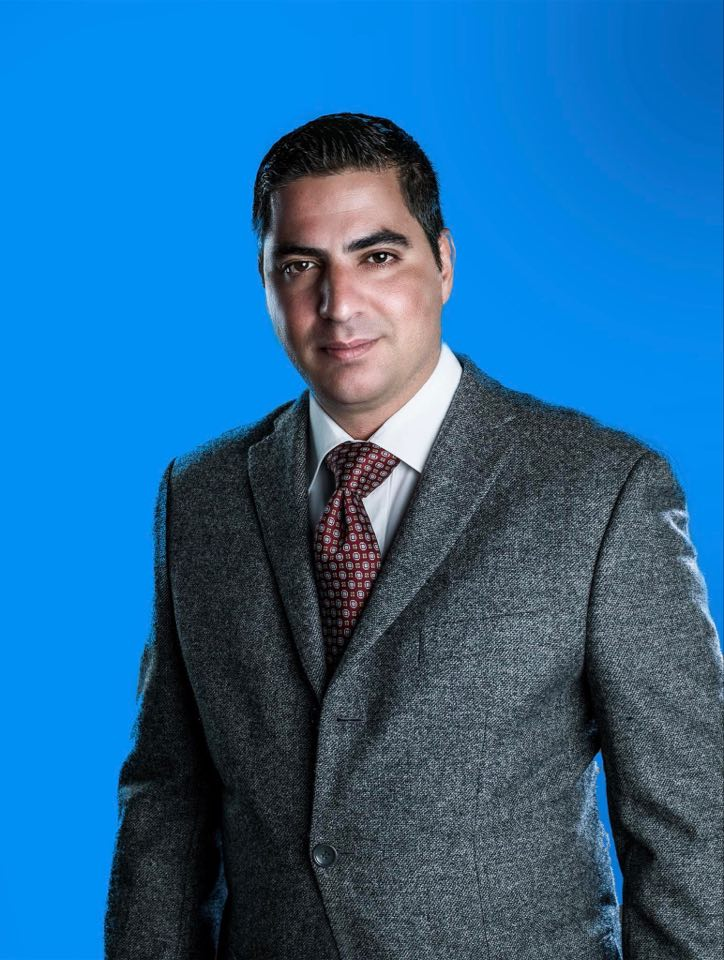
Any discussion about the “Peace Council” and the position of the Republic of Cyprus must start from the framework of International Law, current trends in international relations, and recognition that this is a contentious initiative by US President Trump.
The government’s initial “satisfaction” with the invitation at the Davos Economic Forum in January, Cyprus’s “tactful” non-attendance then, the new invitation and scepticism towards it, create even more scepticism about managing the situation as it emerges, given that Cyprus very rightly bases its foreign policy on International Law and the fact that it is an EU member state.
To reinforce the above, it should be noted that the “Peace Council” has no clear (or at least public) structure based on the principles and values of the UN Charter.
Trump’s initiative comes at a particularly critical juncture for the very foundation of International Law, whose value bases are shaken to their foundations because of unilateral actions being taken in complete contradiction to the existing legal system based on multilateralism, equality, security and stability—which, though fundamental concepts in International Law, are in practice tested daily.
To fully understand the implications for Cyprus regarding its participation or not, or any relationship with the Council, we must thoroughly analyse the following questions: First, what is Trump’s goal in creating the Council? Second, how far does it deviate from the established order in International Law? Third, what benefit does Cyprus gain from participation? The answers to these questions are obviously not simple but complex, creating even more questions.
Very briefly, in conclusion: if, in any dimension of the answers, there is suspicion that the Council aims to move away from the existing International Law framework, then Cyprus’s only position, as a matter of principle, is to stay out, since the most important institutional weapon in our quiver is steadfast adherence to it, and no compromise is permitted.