

Emails exchanged between Jeffrey Epstein and former Israeli prime minister Ehud Barak show Cyprus being criticised and ultimately rejected as a jurisdiction for corporate structuring, according to documents included in the Epstein files.
The correspondence, dated July 2017, centres on discussions about the expansion and financing strategy of the Israeli technology company Reporty, including the location of a planned European subsidiary.
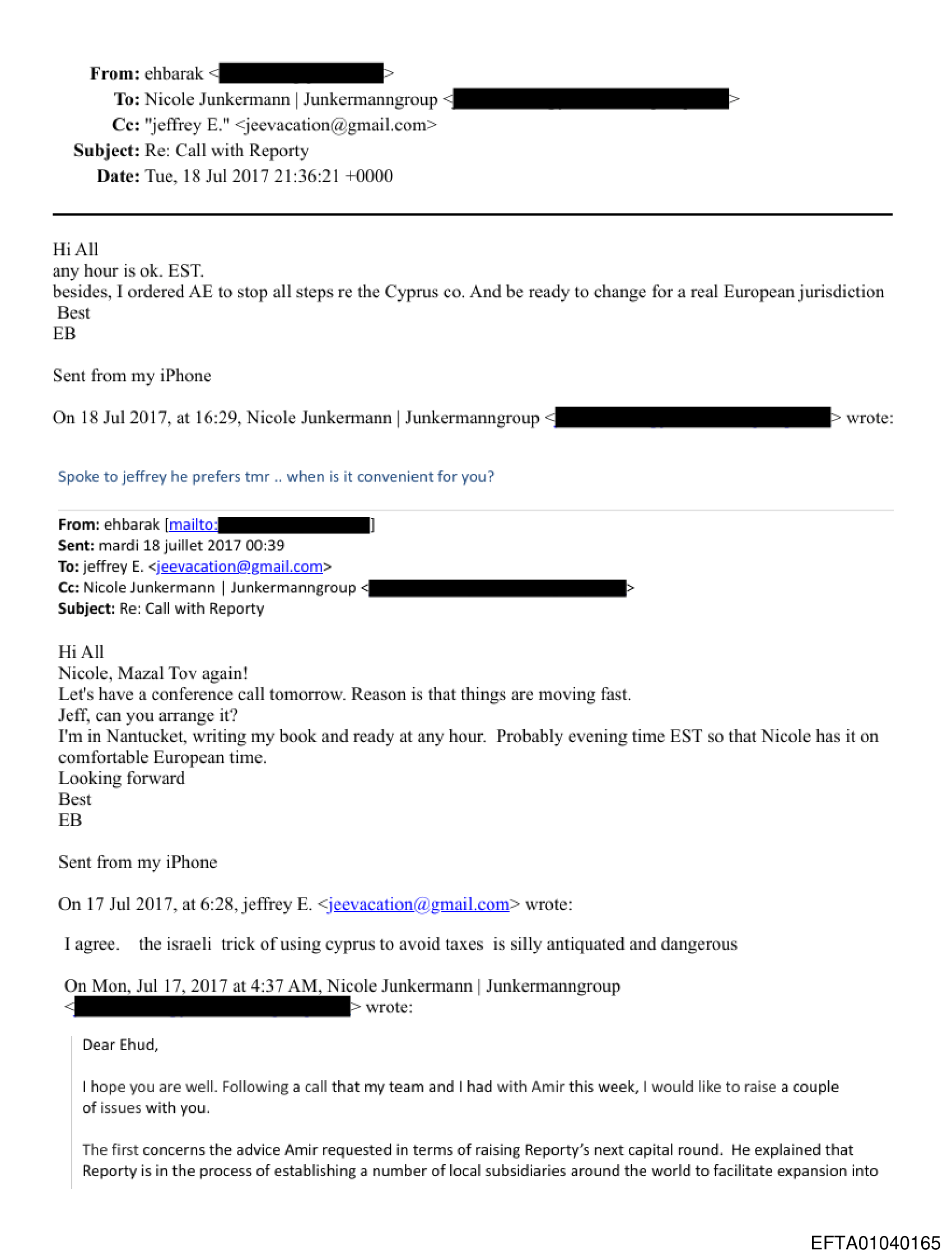
In one email, Epstein wrote that “the Israeli trick of using Cyprus to avoid taxes is silly antiquated and dangerous,” framing Cyprus as a reputational and strategic risk rather than an attractive corporate base. The remark reflects Epstein’s personal view and does not allege illegal activity in Cyprus itself.
Barak later confirmed in the same email chain that the Cyprus option had been abandoned, writing that he had instructed associates to “stop all steps re the Cyprus co. and be ready to change for a real European jurisdiction.” He did not specify whether a Cyprus-based entity had been formally incorporated or how advanced the plans had been.
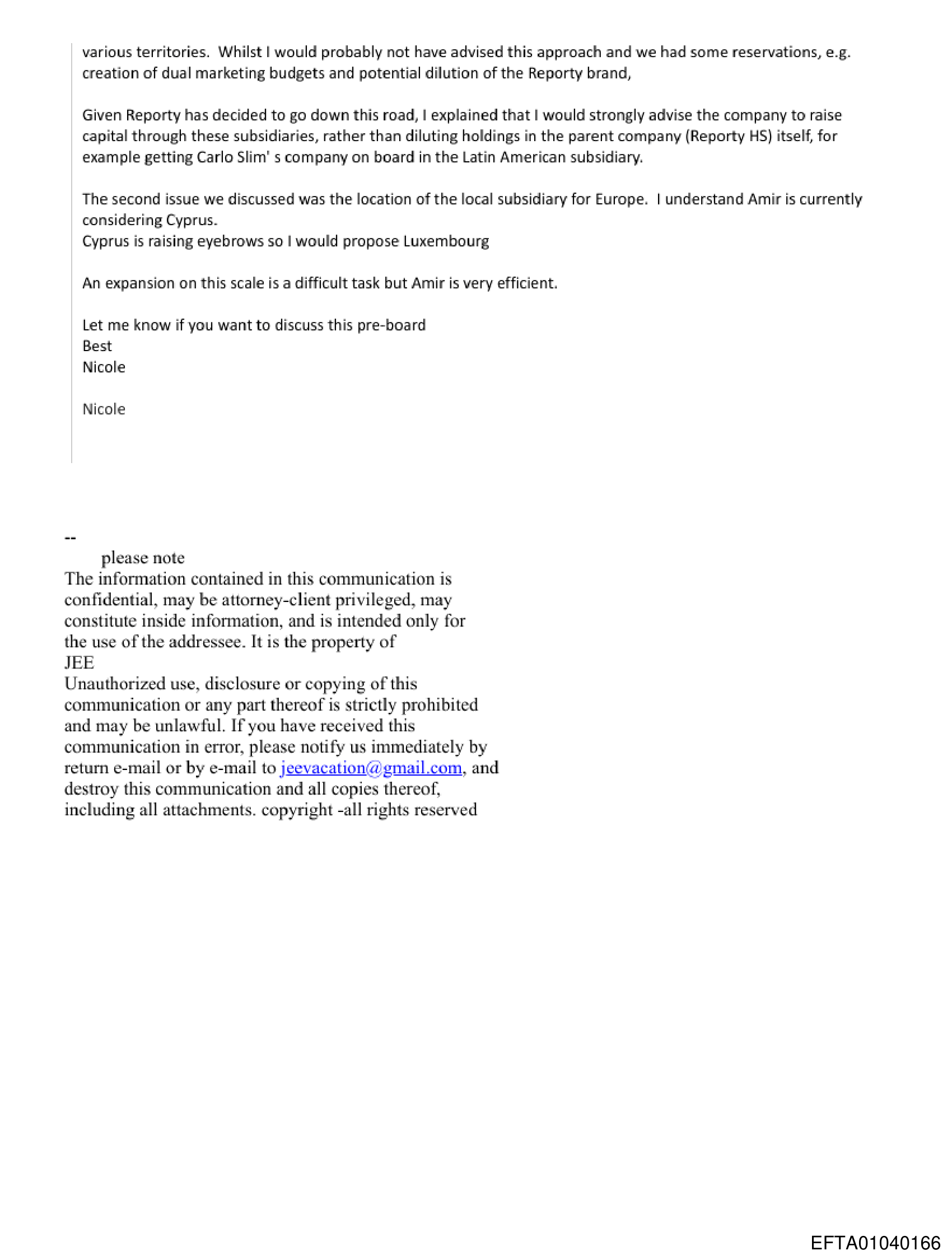
The exchange also includes comments from investor Nicole Junkermann, who warned that Cyprus was “raising eyebrows” and proposed Luxembourg as an alternative base for European operations. Her assessment focused on perception and investor confidence rather than regulatory compliance.
No Cypriot institutions, banks, law firms or officials are named in the correspondence, and the emails contain no suggestion that Epstein or Barak conducted business activity in Cyprus as part of the discussions.
Background
The emails form part of a newly released tranche of Epstein-related material made public by the US Department of Justice, which on Friday disclosed more than three million pages of documents connected to the case.
Epstein was found dead in his New York jail cell in 2019 while awaiting trial on federal sex-trafficking charges. He had previously pleaded guilty in Florida in 2008 to procuring a minor for prostitution, serving a sentence that later drew widespread criticism as overly lenient.
Epstein’s accusers have alleged that he ran an extensive sex-trafficking operation involving underage girls and maintained contacts with members of the political, financial and social elite. Epstein denied wrongdoing before his death.
The case has remained politically contentious in the United States, with lawmakers from both major parties and victims’ advocates repeatedly calling for greater transparency over Epstein’s network of associates and the extent to which others may have enabled or failed to stop his activities.
Read more: