

The European Commission has approved Cyprus’s €1.18 billion defence investment plan under the EU’s new Security Action for Europe (SAFE) programme, opening access to low-interest, long-term loans for military procurement until 2030.
The approval came during a European Commission College meeting in Limassol on 15 January, with Cyprus among the first eight member states to secure backing in the initial approval batch. Another 11 national plans await approval in subsequent rounds.
The SAFE programme represents the EU’s response to what officials describe as an increasingly unpredictable international environment in 2026, marked by the Ukraine war, challenges to international law, US interventions in Latin America, and repeated statements by Donald Trump regarding American claims to Greenland.
The European Council established the programme through regulations issued in May 2024, creating a new financing instrument to support member states investing in defence industrial production through joint procurement. The initiative will provide up to €150 billion in long-term loans with competitive terms, which recipient states must repay.
Cyprus’s procurement priorities
Defence Minister Vasilis Palmas confirmed from the outset that the submitted list contains no weapons systems suggesting offensive intentions by the Republic of Cyprus.
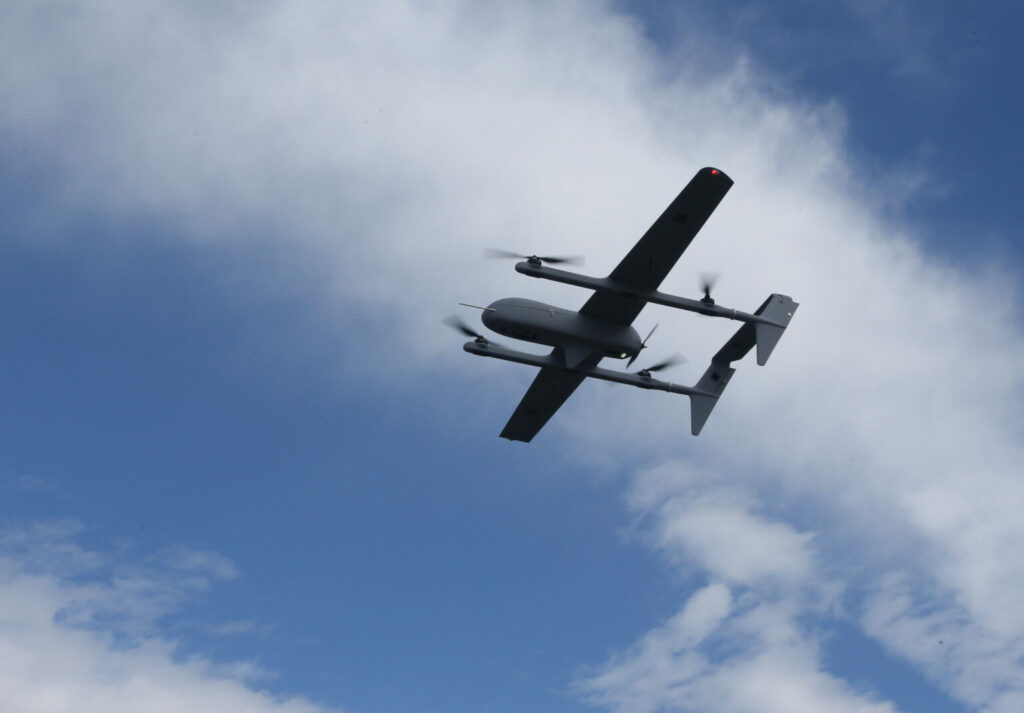
According to official sources, the catalogue includes drones, anti-tank missiles and ammunition selected to meet National Guard requirements within available funding.
French military industry covers 85% of the defence equipment included in Cyprus’s application. The plan encompasses enhancement and upgrading of National Guard aircraft and communications systems, alongside intended purchases of French wheeled armoured personnel carriers equipped with heavy weapons that can also meet armoured combat vehicle specifications.
Cyprus aims to acquire unmanned surface vessels for naval command, whilst all army corps and command levels will receive unmanned aircraft from Cypriot companies. The possibility remains open for upgrading the entire Leonidas armoured fleet through a modernisation programme with Greece, pending approval from Athens.
Programme structure and eligibility
Joint procurement must normally involve at least two participating countries to qualify for SAFE funding. However, due to current geopolitical circumstances and urgent defence capability needs, the programme temporarily permits single member state procurement.
Ukraine and countries in the European Economic Area and European Free Trade Association will be treated essentially on equal terms with EU member states, enabling them to participate in joint European defence procurement and supply products from their own defence industries.
The programme also provides for participation by EU candidate countries, potential candidates, and countries with special security and defence partnerships with the Union, including the United Kingdom. These nations can join procurement schemes without full equivalence to member states.
SAFE funding covers two product categories. The first addresses conventional defence equipment including ammunition, missiles, artillery systems, soldier equipment, critical infrastructure protection, cybersecurity and military mobility. The second category encompasses advanced systems such as anti-aircraft and anti-missile defence, naval capabilities, drones, space assets, artificial intelligence and electronic warfare, subject to stricter eligibility criteria.
Turkey excluded from direct access
Turkey failed to secure inclusion in the lending mechanism despite intense pressure from certain EU member states including Germany. The Commission ultimately never submitted Turkey’s summer application for assessment, given it would inevitably face vetoes from Cyprus and Greece alongside serious French reservations.
Turkey’s only remaining access to SAFE involves bilateral defence cooperation with bloc member states. However, only 35% of any SAFE-funded project can originate from Turkey or the UK. The remaining 65% requires special bilateral agreements with the EU, no longer feasible for either country.
Britain declined participation after rejecting what it considered an excessive price tag of €4-€6.5 billion for full programme access, according to international reports. South Korea was also excluded as its application was not assessed.
Parliamentary and budgetary process
The Defence Ministry in cooperation with the Finance Ministry will determine and approve amounts drawn from SAFE’s low-interest lending, which will be deposited into the Defence Ministry budget before parliament votes on the allocations to strengthen state defence.
Read more: