

As Nicosia marks its assumption of the EU Presidency at the THOC Theatre, three seminal figures are notably absent: Costas Simitis, Glafcos Clerides, and George Vassiliou. While Simitis and Clerides have passed away, Vassiliou was unable to attend due to illness. These three men provided the political ballast for a 14-year odyssey that transformed Cyprus from an applicant into a core European member.
George Vassiliou: The Pragmatic Visionary
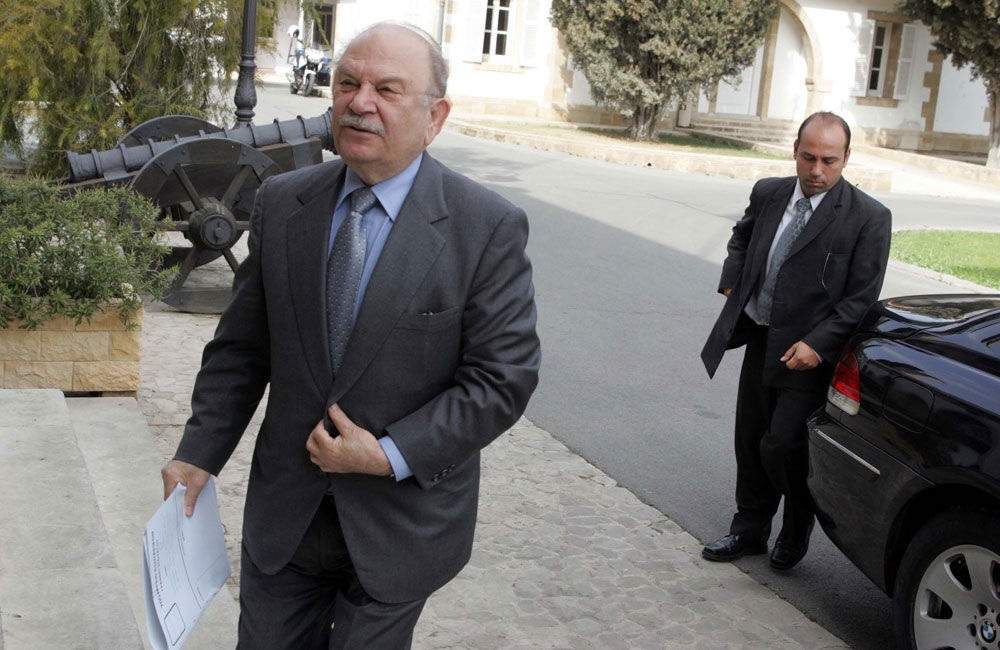
In 1990, George Vassiliou took the historic gamble of applying for membership halfway through his presidency. He acted against the intense opposition of his political partners, AKEL, and faced external threats from Turkey. Vassiliou worked with a blend of methodical secrecy and diplomatic grit, convincing European leaders one by one.
His memoirs, Building the Future, reveal a masterclass in realpolitik. When Iraq invaded Kuwait, Vassiliou immediately offered Britain’s Margaret Thatcher and US President George Bush Cyprus’s full support for UN resolutions. This strategic loyalty paid dividends; when the time came to apply, the West—and Thatcher in particular—found it impossible to say no.
The “Danish Gambit” and British Sabotage
The path was far from smooth. Vassiliou recalls that while France and Italy were eventually persuaded, Denmark remained hesitant. It later emerged that Britain was pulling the strings from the wings. The Danes, acting on British advice, suggested a bizarre compromise: Cyprus should publicly declare its intention to apply but not actually submit the paperwork. Vassiliou saw through the ruse, insisting that Cyprus be “on the record” as a formal applicant.
The Internal Battle: July 4th, 1990
The decision was finalised in a frantic 24-hour period on 4 July 1990.
The Morning: Vassiliou secured a unanimous vote from his Cabinet—his first “small victory.”
The Afternoon: He faced the National Council. While DISY, DIKO, and EDEK pushed him to move faster, AKEL leader Demetris Christofias remained the sole dissenter, arguing that the application would derail the Cyprus problem and offered no immediate substance.
Glafcos Clerides and Costas Simitis: Closing the Circle
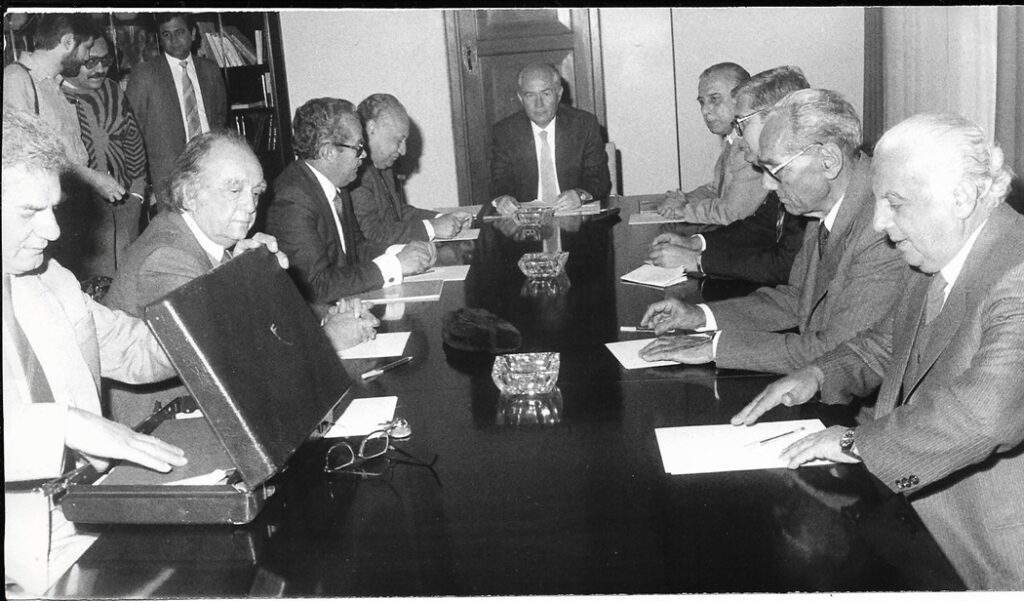
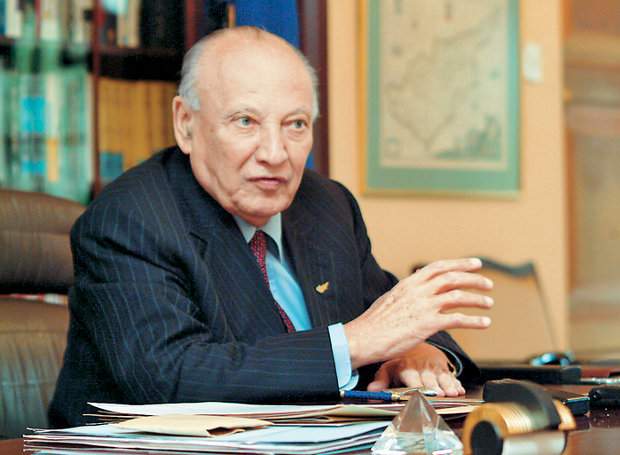
Glafcos Clerides took the baton as President, using his legendary political maneuvering to navigate the final decade of the process. His crowning achievement was ensuring the 2004 accession went ahead even without a solution to the Cyprus problem.
Meanwhile, in Athens, Prime Minister Costas Simitis provided the ultimate leverage. He famously warned EU allies that the Greek Parliament would be the last to vote on enlargement; if Cyprus were excluded, Greece would veto the entire expansion to Eastern Europe. This “all or nothing” ultimatum forced the EU’s hand, cementing Cyprus’s place in the European family.
The formal application was eventually handed over in Brussels by then-Foreign Minister George Iacovou. Today, that paperwork stands as the foundation of Cyprus’s modern European identity.