

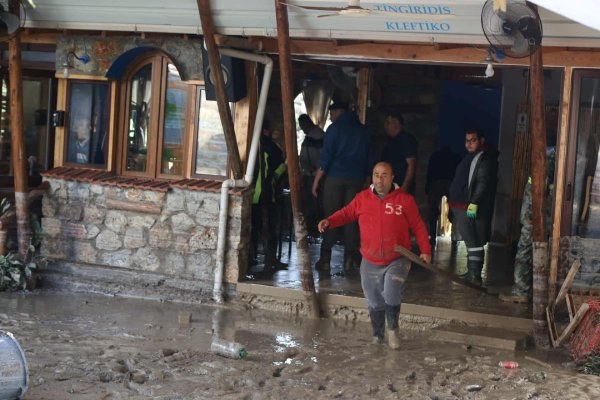
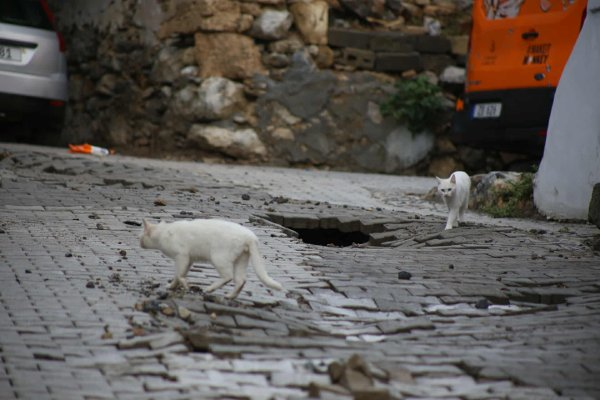
Heavy rainfall has caused extensive damage in Dikomo in the occupied areas, with torrential waters from Pentadaktylos damaging houses, cars and the road network.
Damage also struck the other side of Pentadaktylos in Larnaca of Lapithos, where “agriculture minister” Huseyin Cavus inspected the destruction this morning.
He said heavy rainfall, particularly increased water flow from mountain slopes, caused road collapses, flooding and environmental damage.
The “water and forestry departments” and all relevant technical teams are working in coordinated fashion to rapidly address damage in the Larnaca tis Lapithou area, he said.
Roads subsided, residents criticise authorities
Roads subsided in Dikomo and flooding caused major damage to houses, according to extensive Yeni Duzen reporting. Village residents told the newspaper they stayed in their homes for days fearing the worst, and criticised the “government” for failing to take timely measures.
RTP president Sila Usiar Incirli met with the “mayors” of Dikomo and Kyrenia to be briefed on the situation, saying her party stood ready to support people and local “authorities”.
Millions of cubic metres lost to sea
Erkut Uluciam, president of the chamber of agricultural engineers, said millions of cubic metres of water are flowing to sea because dams have not been cleaned.
“The abundant rains that were expected for months, even years, have arrived, but again, because no preparations were made, the water rolled into the sea,” he said.
At least 1 million cubic metres of water was lost to sea from the Ovgos dam in the last 36 hours alone, he noted.
Not one dam has been cleaned during the last two years of extreme drought, Uluciam said, noting the Chresilos, Pediaios and Kioneli dams have not been cleaned for years due to lack of budget. He questioned who would bear the financial losses caused by these dams overflowing.
Historic Chresilos dam uncleaned
Uluciam referenced the Chresilos dam, the second largest project for the Morphou area, which was included in the Cyprus Republic government’s first five-year development programme.
Construction started in 1963 during the tenure of then Turkish Cypriot agriculture minister Fazil Plumer and was completed in 1964.
The dam sits 9 kilometres from the sea and 60 metres above sea level, with a capacity of 850,000 cubic metres. Uluciam questioned whether this dam would be cleaned in 2026.
Health warnings issued
The Turkish Cypriot medical association expressed condolences for the flood destruction and warned of the possibility of infectious diseases appearing.
Caution is needed due to the possibility of drinking water contamination and sewage mixing with water tanks and the network, the association said.
Food contaminated by floodwaters should not be consumed, and any health problems should be reported to health centres.
(information from CNA)
Read more: